What Artwork Setup Covers
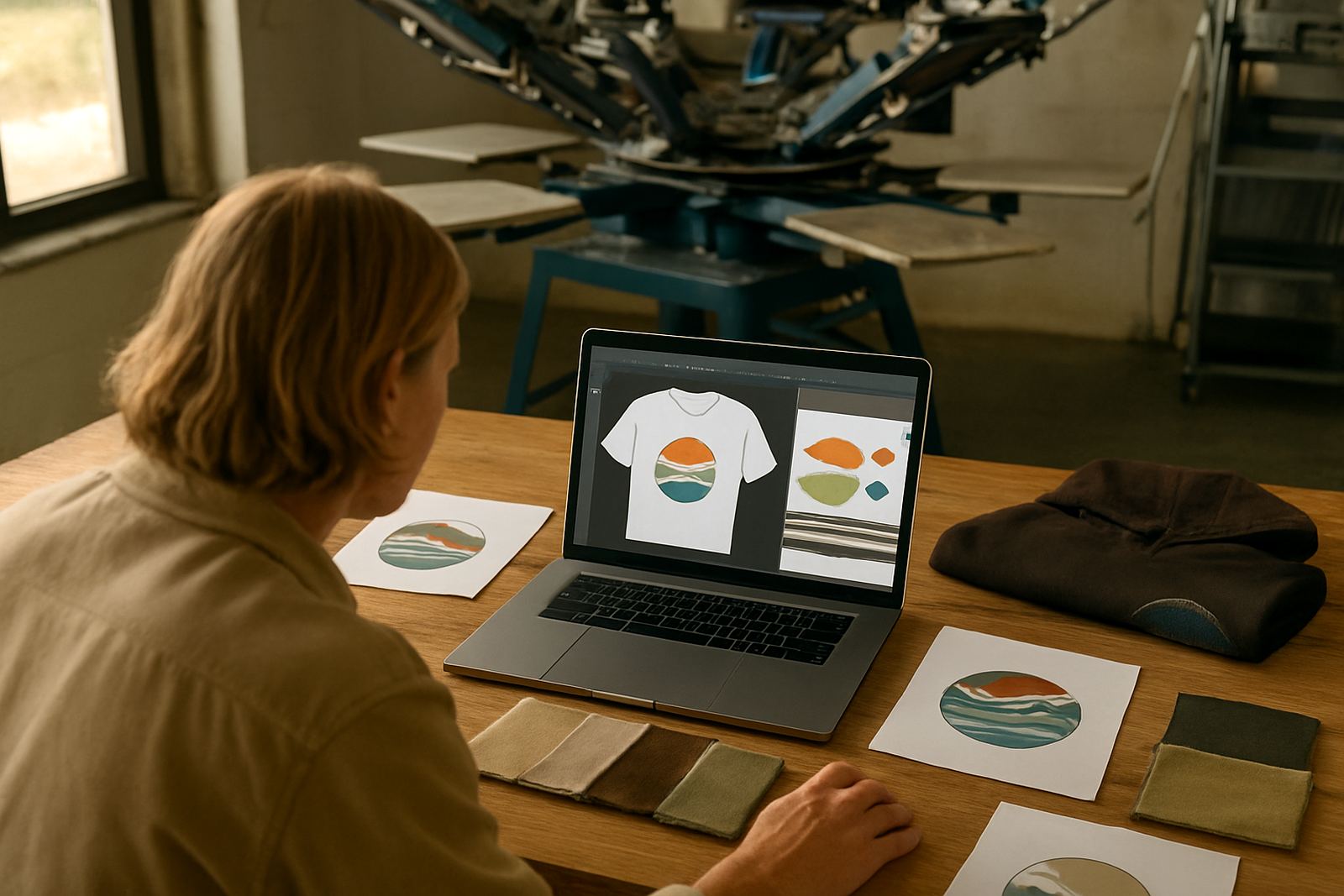
Artwork setup is the stage where a design is prepared properly before it goes on press. It helps avoid fuzzy edges, missing fonts, low resolution images and colour surprises once ink meets fabric. If you send a logo that is too small, a social media image, or a file with colours that will not separate cleanly, we tidy it up into something print-ready.
For garment printing, we look at line weight, contrast, size on chest or back, colour count and where the print will sit on the item. A neat file can still print poorly if it is scaled badly or has fine detail that will disappear on textured cotton, polycotton or hoodies. We correct that before production starts, which saves time and waste, especially on repeat orders and bulk runs.
- Logo clean-up for screen printing
- Artwork resizing for left chest, full front and oversize back prints
- Colour simplification for one colour prints
- Separate setup for sleeve, neck label and team numbering work
Files We Prefer And What We Can Work From
The best starting point is a vector file, such as AI, EPS or PDF with text outlined. That gives clear edges at any size and makes ink separation easier. If you do not have that, we can usually work from a high resolution PNG, JPG or PDF and rebuild the artwork where needed. A blurry file from a phone photo is not ideal, but it is often still usable if the design is simple.
For garment printing, resolution matters. As a guide, raster artwork should be at least 300 dpi at final print size. For a standard chest logo, aim for crisp artwork that will hold detail at around 90 mm to 110 mm wide. For a back print, we often work in the 250 mm to 300 mm range depending on the garment size. If text is part of the artwork, we convert it to outlines so font changes do not cause problems on the press.
- Preferred: vector artwork with outlined text
- Accepted: high resolution PNG, JPG or PDF
- Minimum useful resolution: 300 dpi at print size
- Common print widths: 90 mm to 110 mm chest, 250 mm to 300 mm back
How We Prepare Your Design For Print
Once we have your file, we review it for print suitability and identify what needs attention. That may include cleaning up jagged edges, balancing spacing, isolating colours or adjusting the layout so it sits better on the garment. A logo that works on a screen can need slight changes for fabric, because cloth stretches, seams interrupt placement and textured materials can hide small detail.
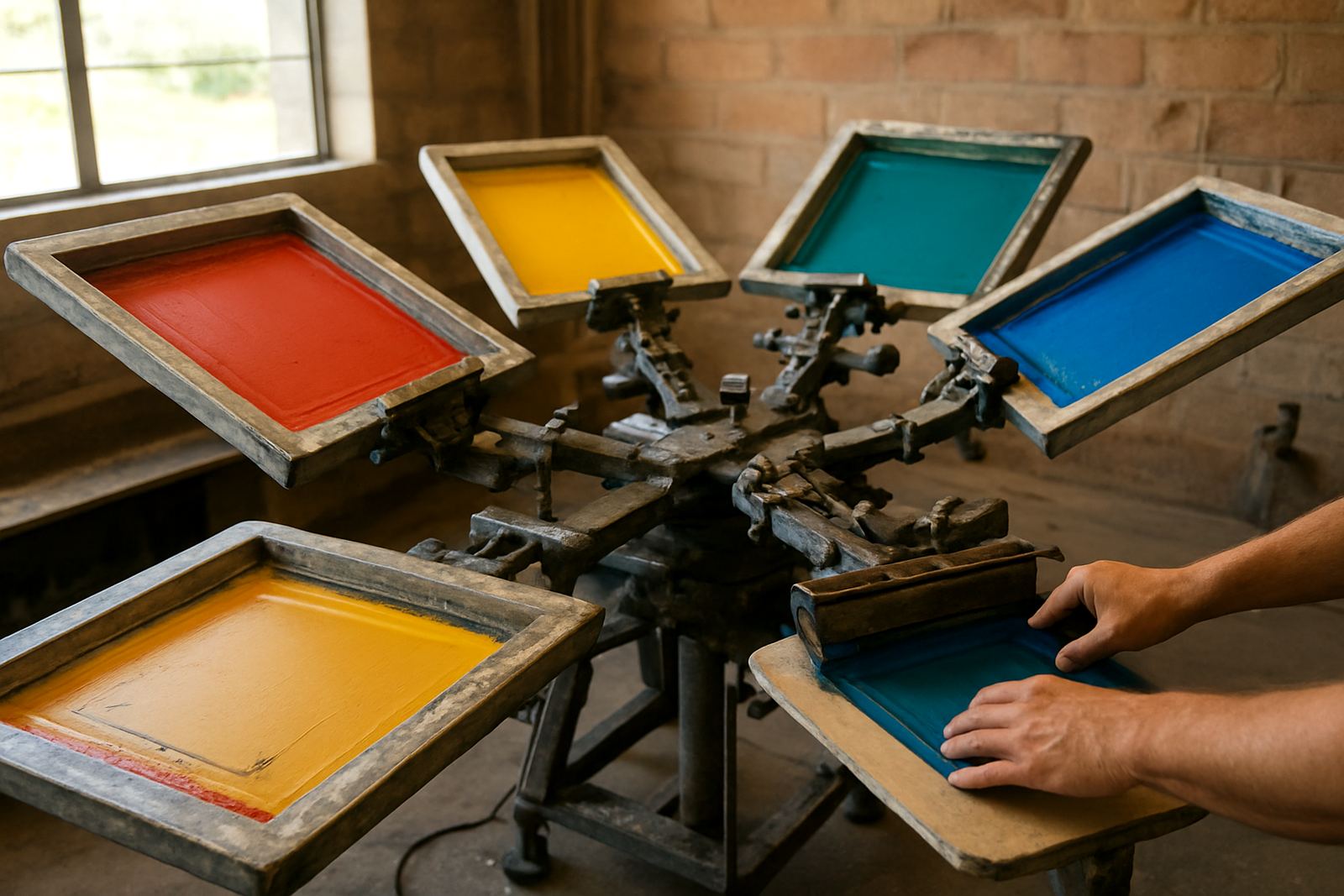
From there we set the artwork up according to the print method. One colour prints need strong clear shapes. Multi-colour jobs need accurate separations and sensible overlaps. If you want a left chest mark and a large back print on the same order, we prepare each position separately so the final result stays consistent. On school and club orders, that also helps when sizes vary across small, medium and extra-large garments.
- Artwork review and print suitability check
- Layout adjustments for garment placement
- Colour separation or colour reduction where needed
- Positioning for front, back, sleeve and neck label prints
Sample Strike-Offs And Approval
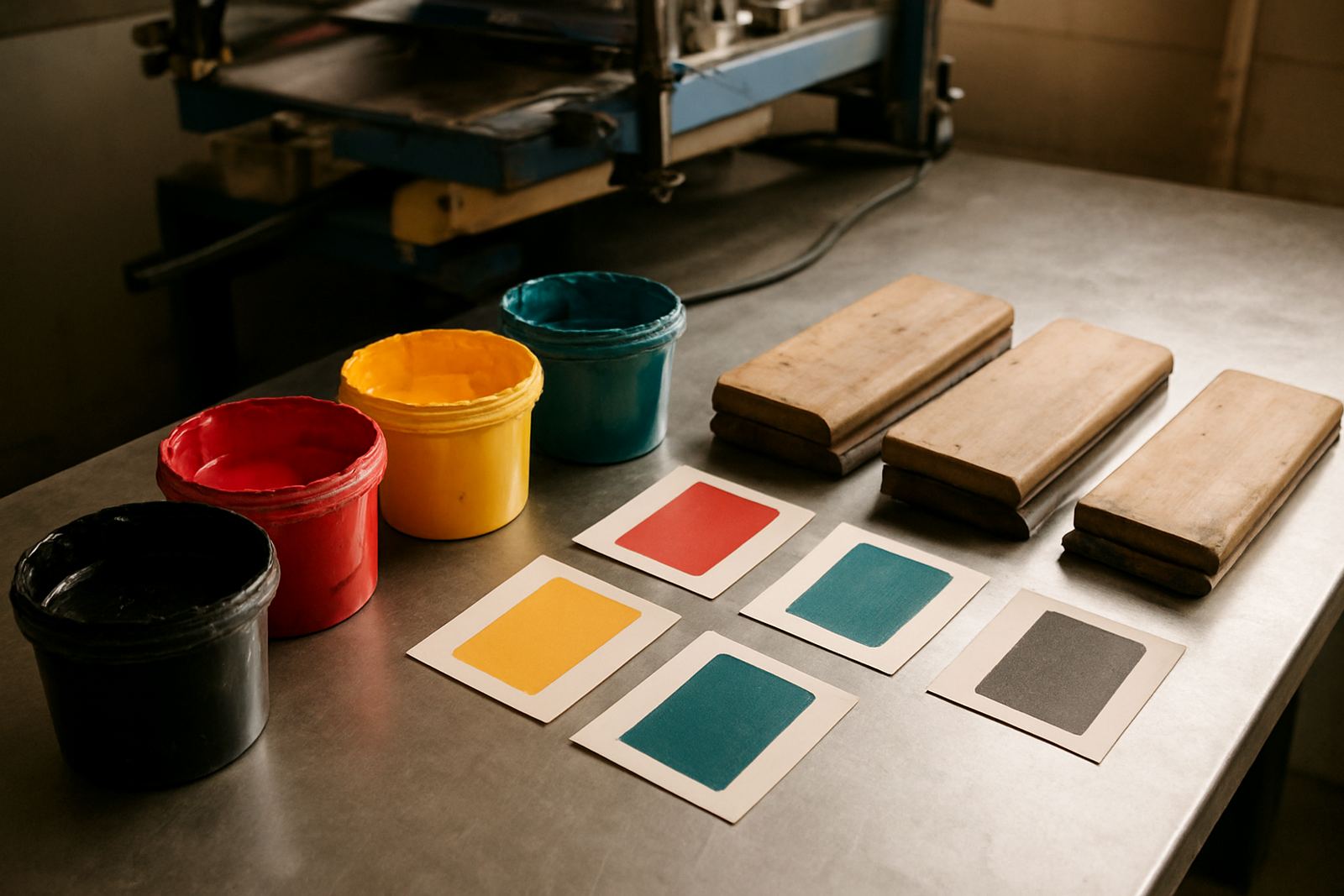
For first-time jobs, detailed reworks or colour-sensitive jobs, a sample strike-off can be worth it. This is a test impression used to check size, placement and ink appearance before the full run. It is especially useful for school leavers wear, surf-town retail pieces and event shirts where the client wants the print to read clearly from a distance, but still look neat up close.
We also use proofing to confirm spelling, spacing and any special instructions before production starts. If the artwork needs one last tweak, that is the time to make it. After approval, we keep the setup on file for repeat orders, which makes future runs faster and helps maintain consistency across replenishment orders. That matters when you need the same logo printed again months later, with no shift in size or colour.
- Sample strike-off available on request
- Proofing for size, placement and spelling
- Stored setup for repeat order support
- Useful for colour-critical or high-visibility jobs
Turnaround, Pricing And When It Makes Sense
Artwork setup turnaround depends on how ready the file is when it arrives. Simple files may be sorted quickly, while damaged artwork, font matching or redraw work takes longer. If the order is urgent, say for an event in Jeffreys Bay or a school trip out of Gqeberha, tell us upfront so we can plan the queue properly. During load-shedding or busy production weeks, we still work through setups in order, but complex files may need a little extra lead time.
Pricing is based on the amount of work involved. A straightforward logo tidy-up costs less than a full redraw or multi-colour separation. We quote on what is needed, not on guesswork. For bulk garment orders, artwork prep is often folded into the overall job cost when the setup is simple. If there are multiple designs, variable names, or several print positions, we price that separately so you know exactly what is being done.
- Simple setups are usually the quickest to process
- Complex redraws and separations need more lead time
- Urgent jobs should be flagged before order confirmation
- Pricing is based on actual artwork work required
Keeping Artwork Ready For Reorders
Artwork files should not be treated as one-time use. Once a design has been prepared properly, it should be kept in good shape for future runs. We store repeat-ready versions where possible so that the next batch of shirts, hoodies or caps can move faster. That is handy for clubs, schools and business teams that order in terms, seasons or campaign cycles. It also means fewer mistakes when a logo is printed again months later.
As a rule, it is wise to review artwork before each reprint if there has been a change in sponsor names, school wording, contact details or team kit sizing. For garment print files, a quick check every 6 to 12 months is practical, especially when branding changes are likely. If the original design is getting old or has been used on many different items, we can tidy it again so it stays sharp and consistent.
- Repeat-ready artwork stored for future runs
- Best practice is to review files every 6 to 12 months
- Update artwork after sponsor or contact detail changes
- Helpful for schools, clubs and ongoing staff wear
Key facts
| Service area | Jeffreys Bay, Humansdorp, St Francis Bay, Cape St Francis, Oyster Bay, Kareedouw and Gqeberha |
|---|---|
| Typical print file size | 90 mm to 110 mm chest logos, 250 mm to 300 mm back prints |
| Preferred file types | AI, EPS, PDF with outlined text, or high resolution PNG/JPG |
| Minimum artwork quality | 300 dpi at final print size for raster files |
| Common setup tasks | Resize, clean-up, colour separation, text outlining and placement |
| Best for | T-shirts, hoodies, caps, team kit, school wear and event garments |