

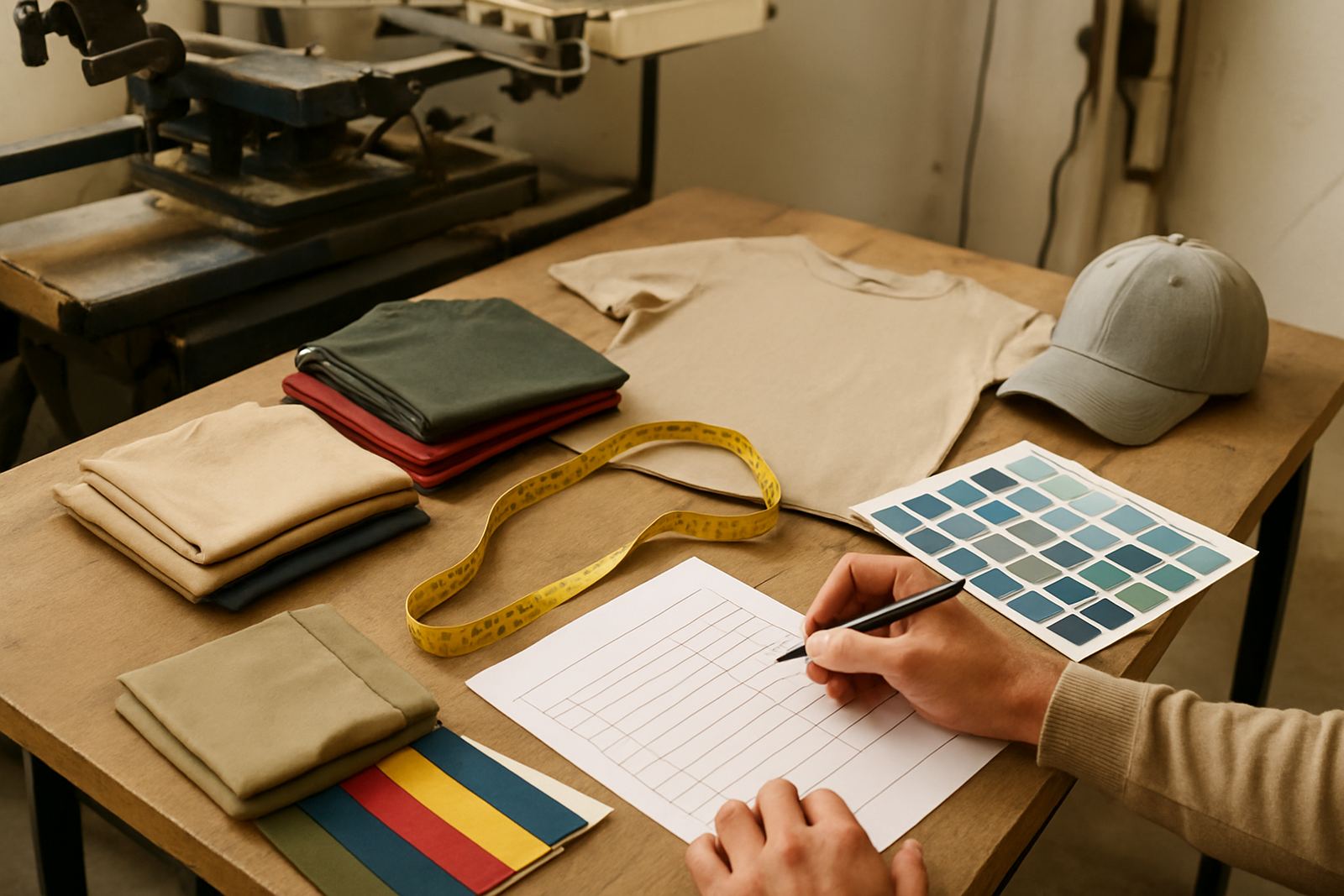
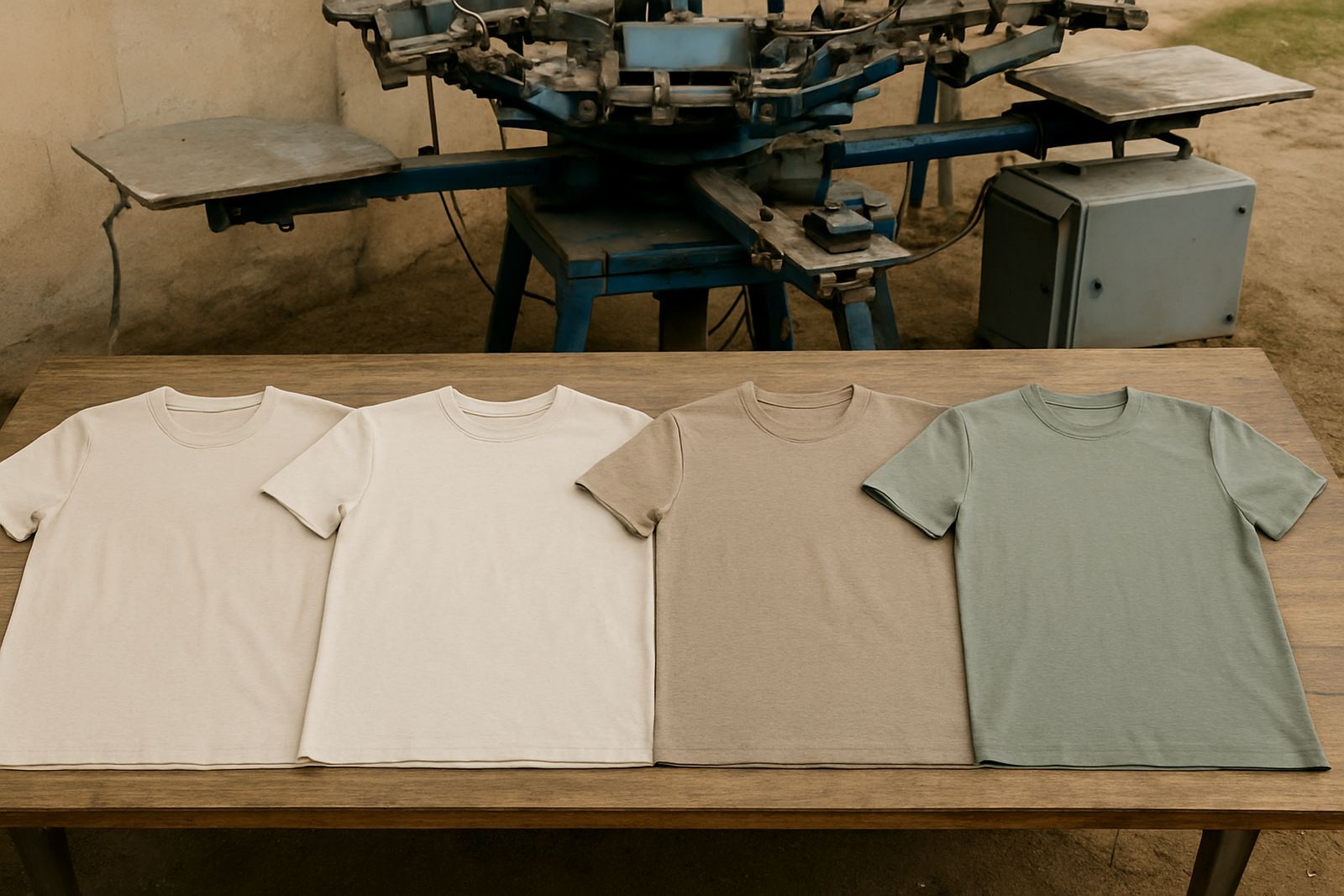
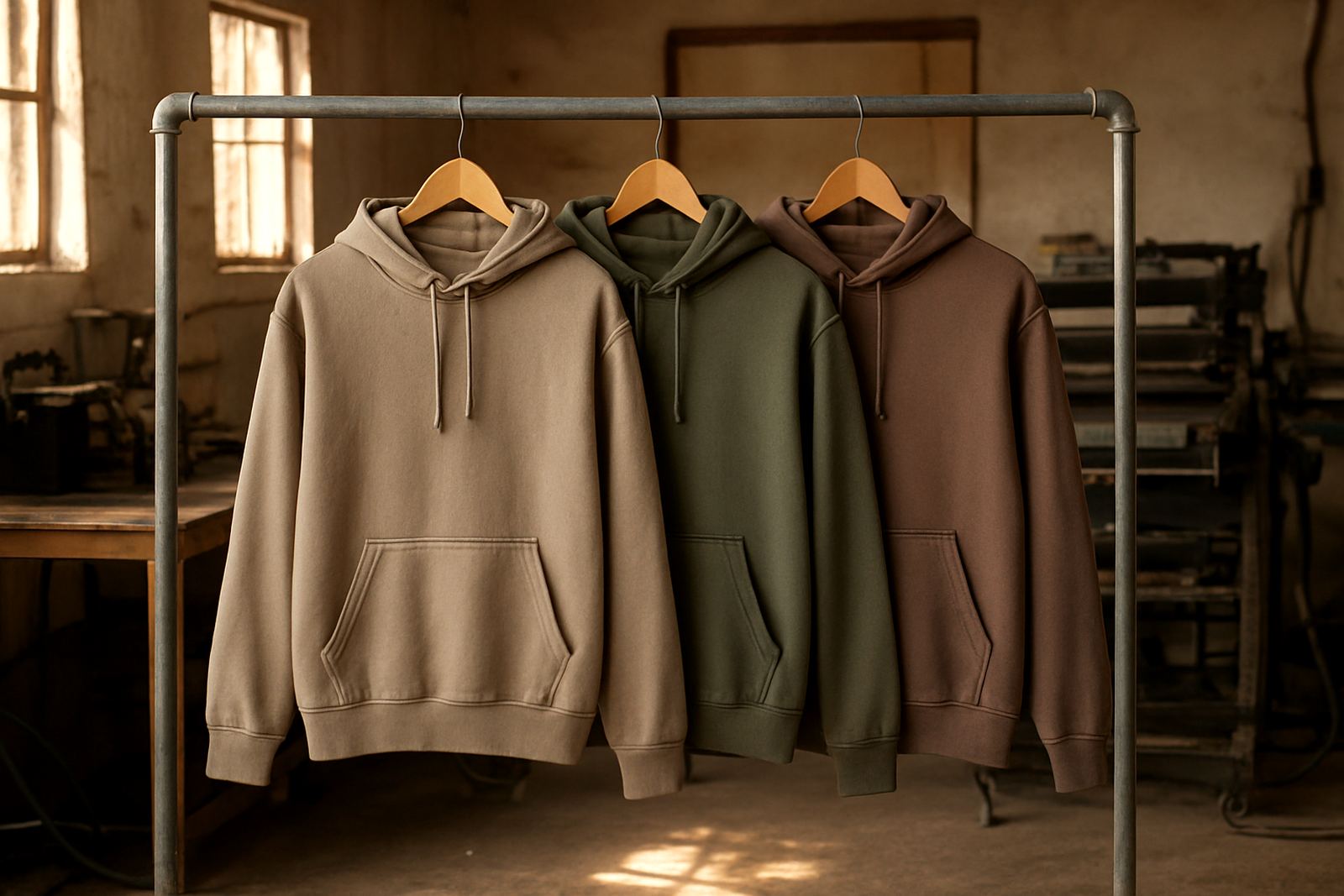
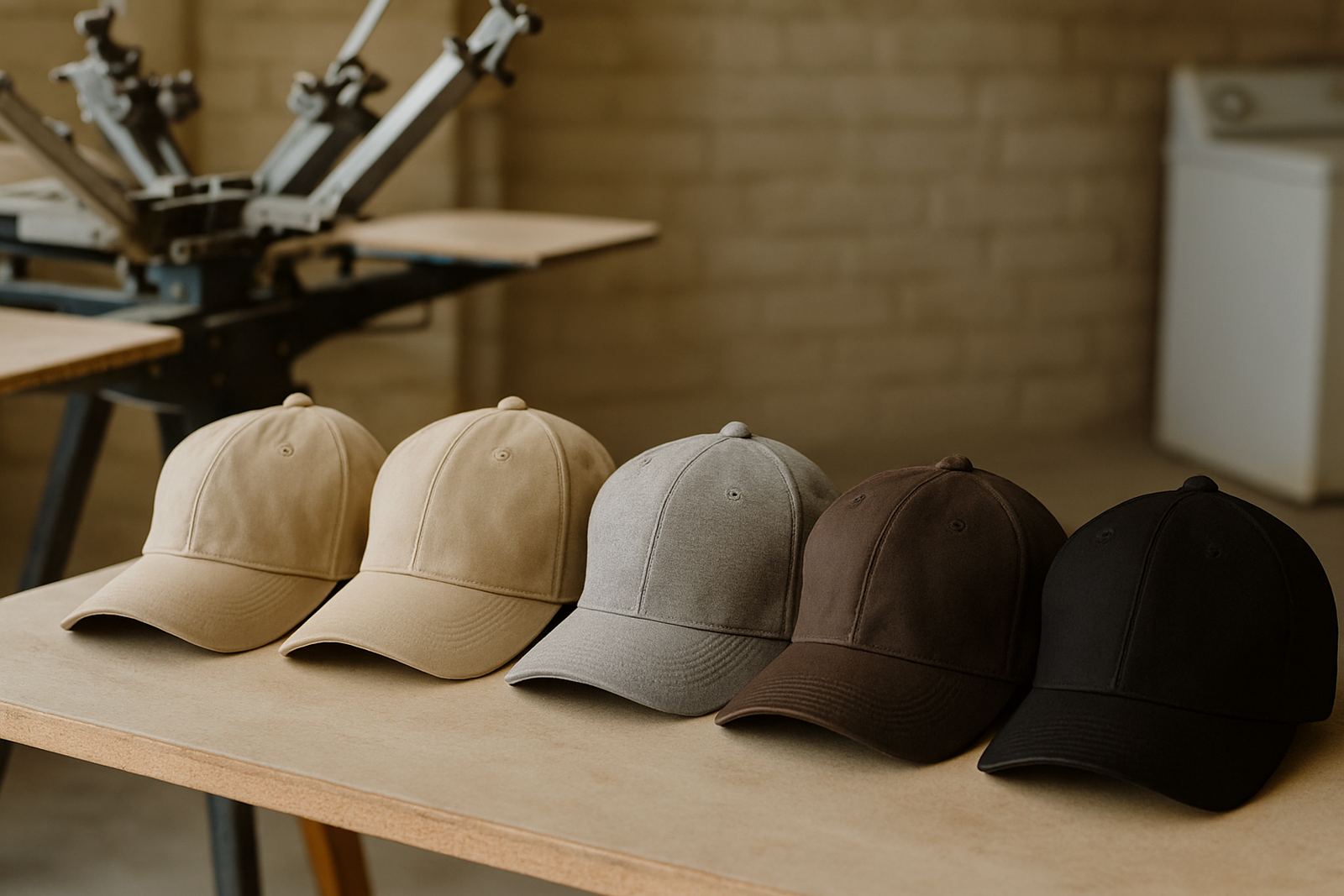
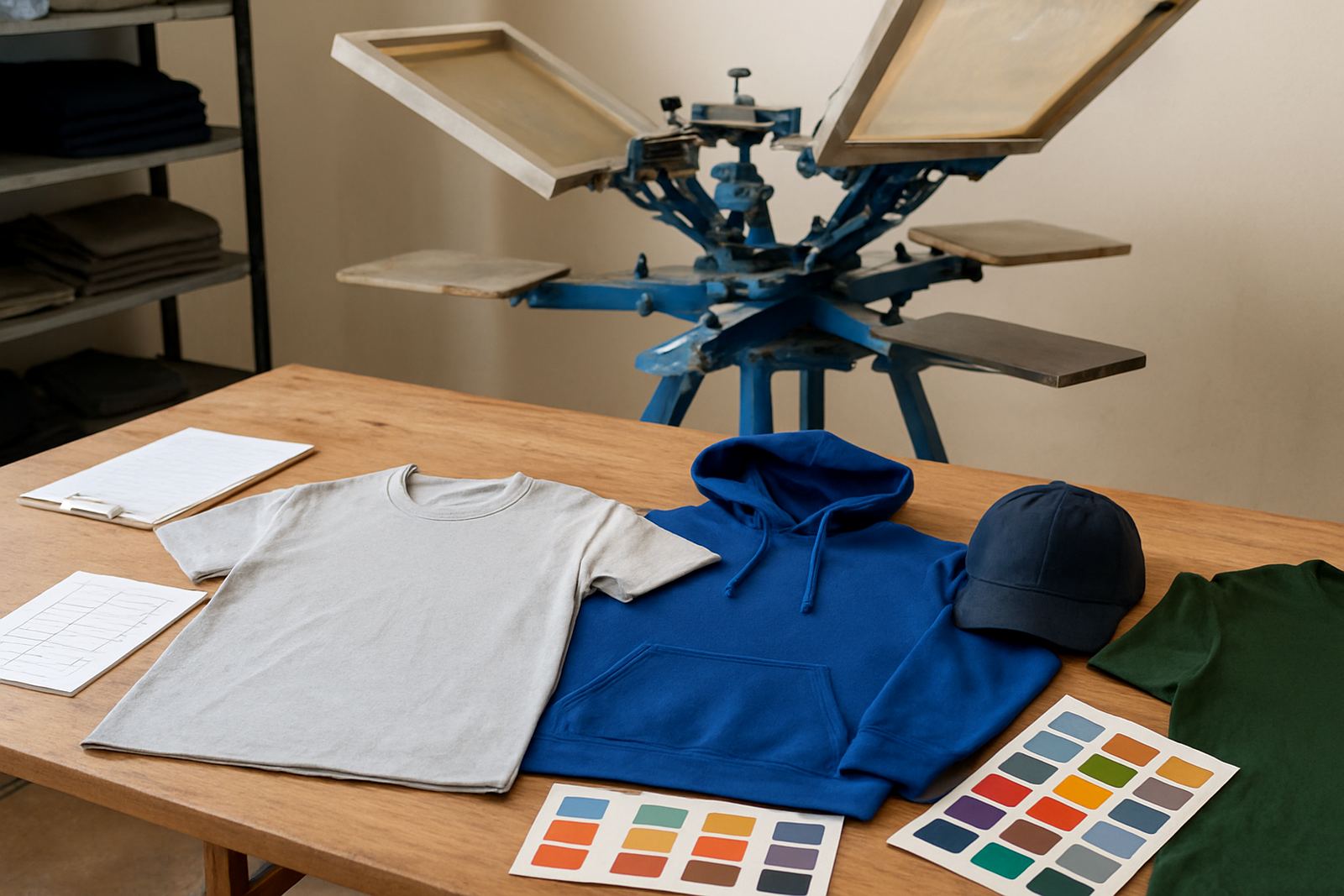
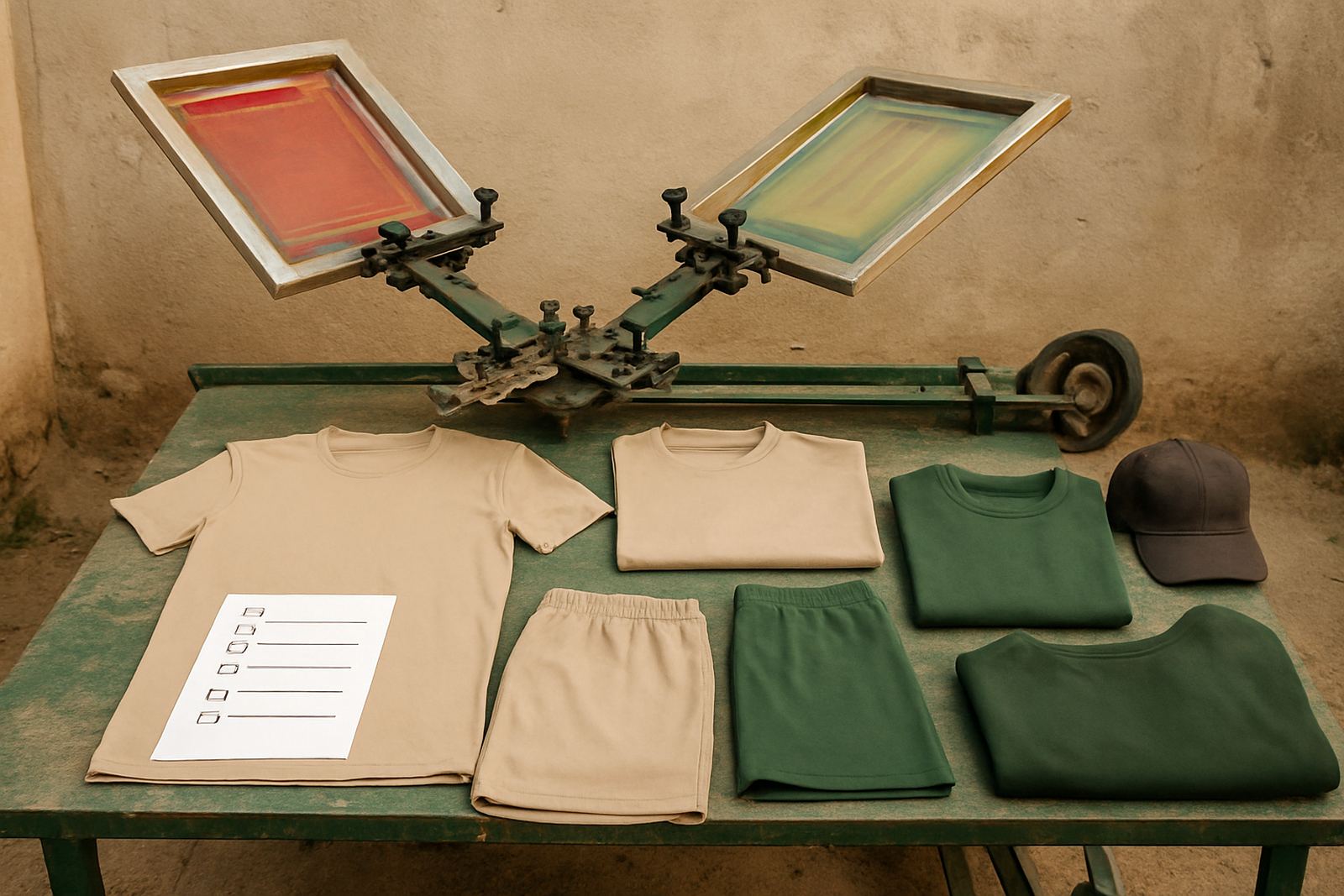
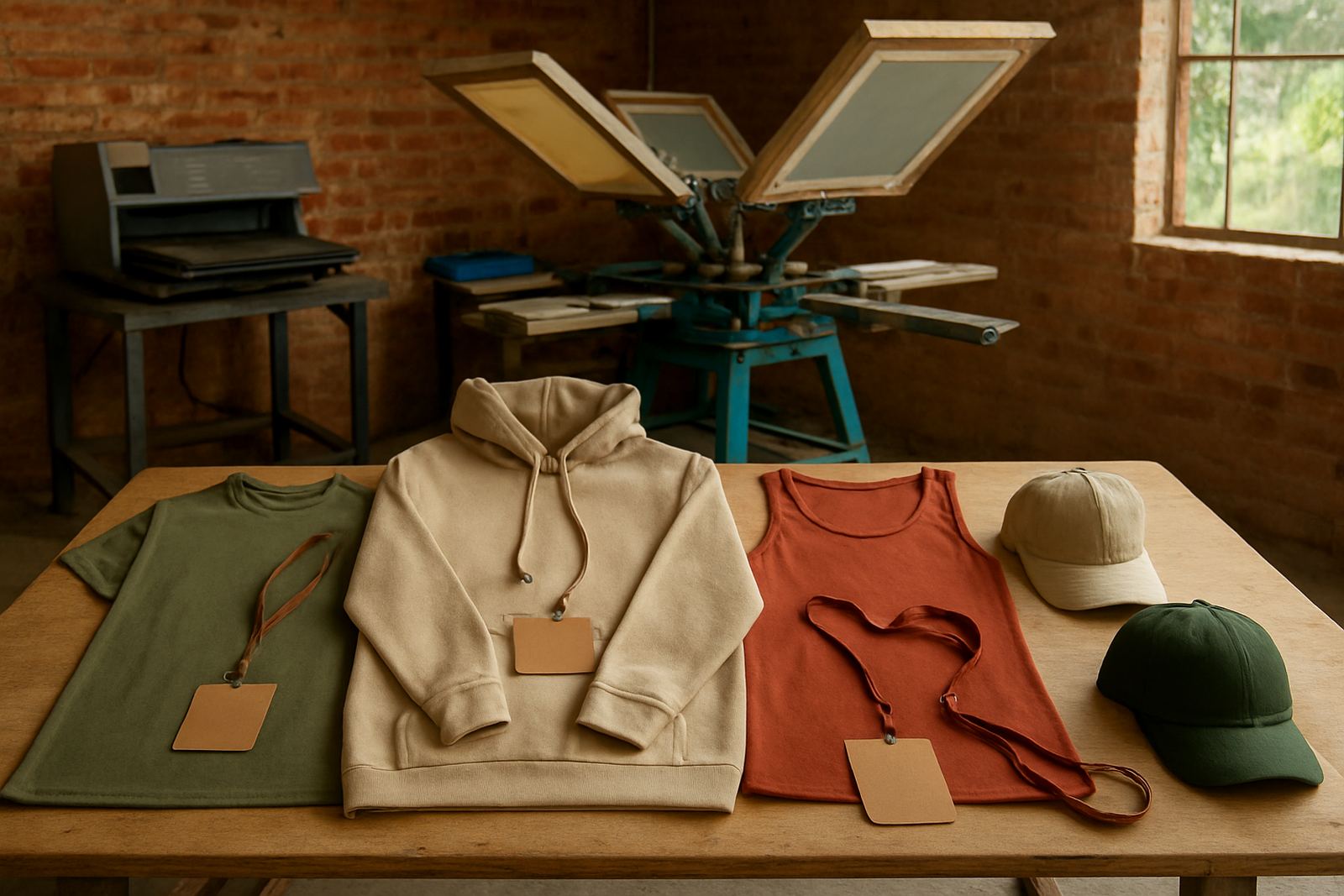
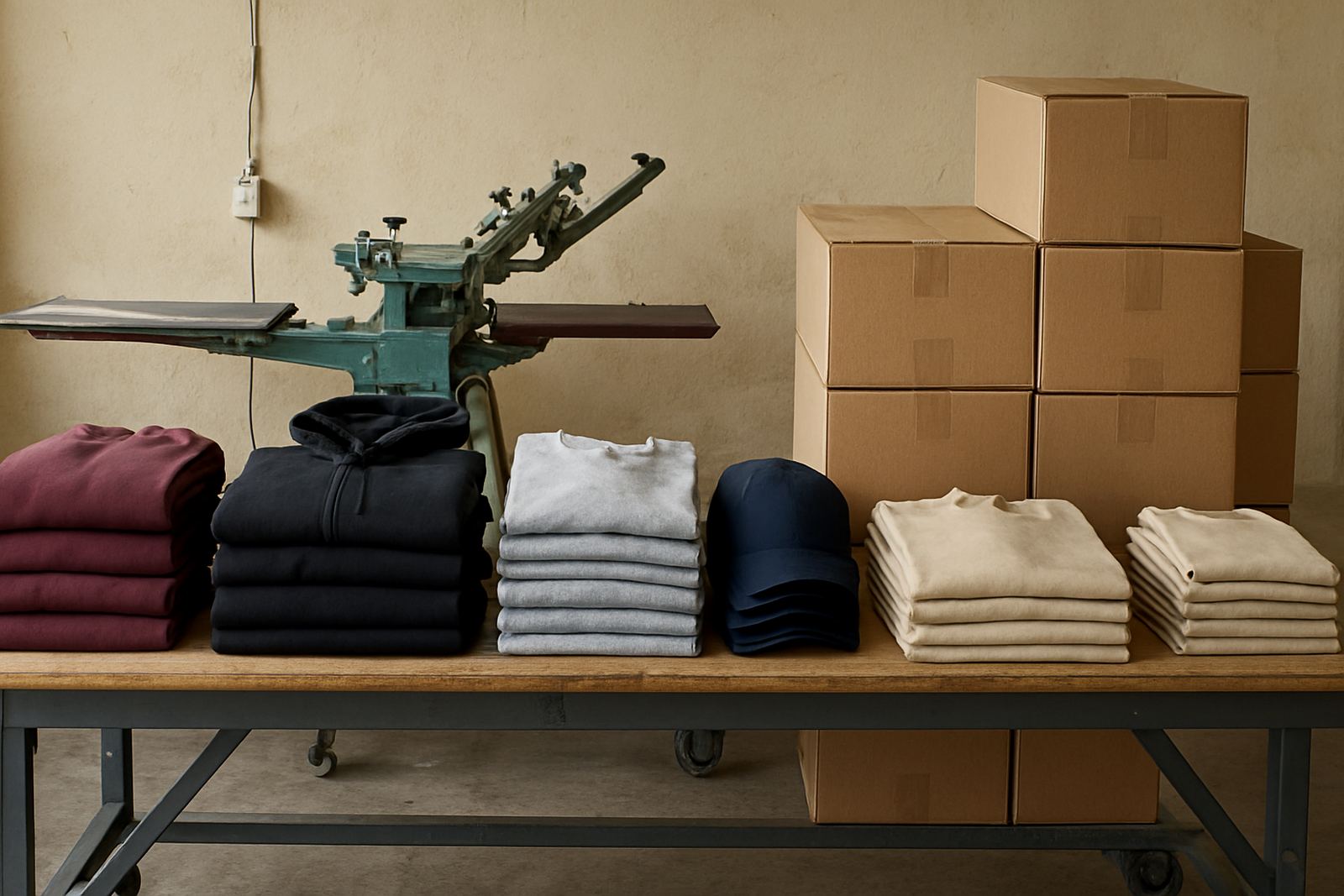
Start Here: Choose the Right Garment for the Job
Not every garment suits every print. A school fundraiser tee, a coastal work shirt and a heavy winter hoodie each need different fabric, weight and finish. If you are ordering for Jeffreys Bay, Humansdorp, St Francis Bay or Gqeberha, start by thinking about who will wear it, how often it will be washed and whether the order needs to work in warm inland weather or the salty coastal air.
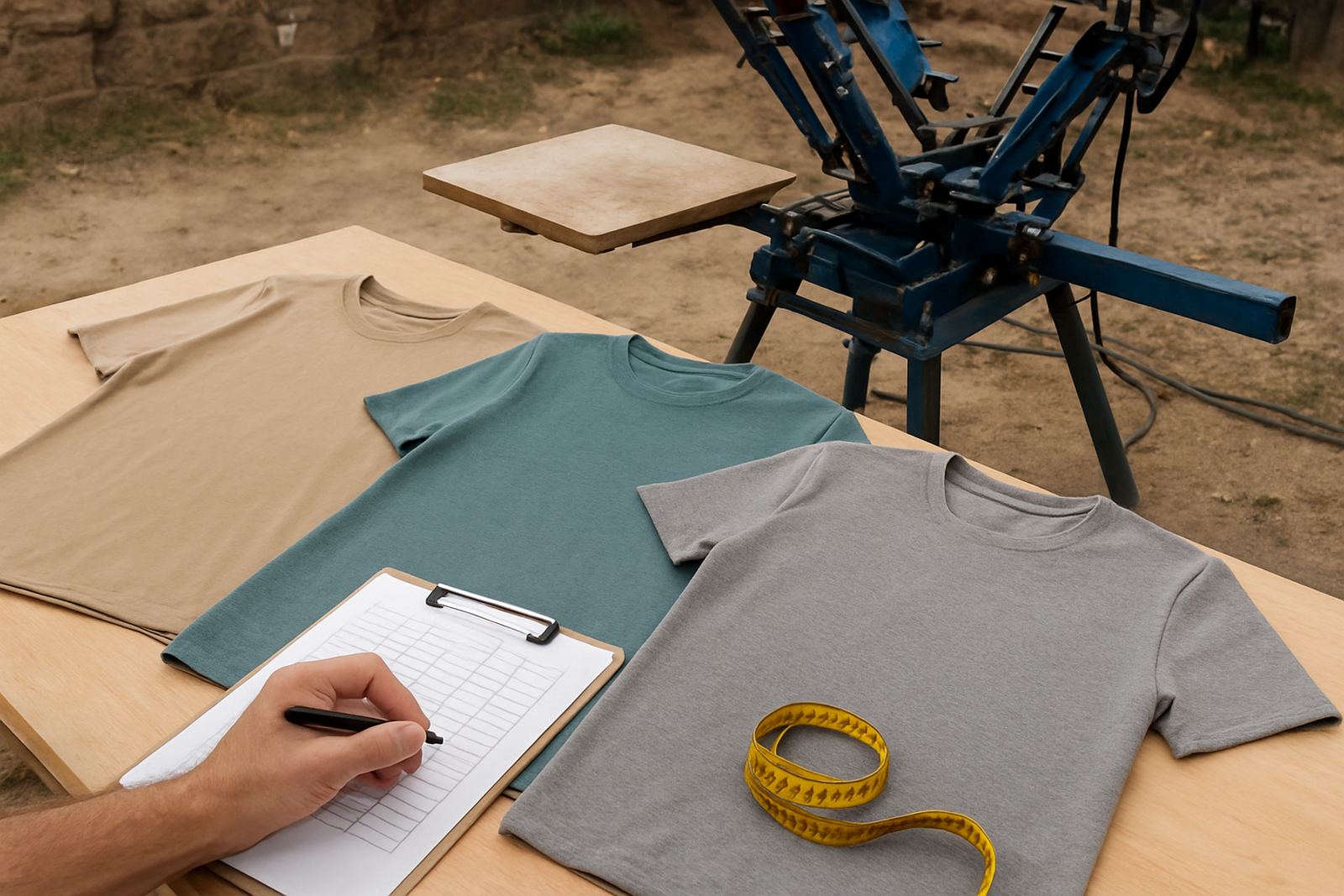
As a guide, lighter tees are best for events and promo wear, while heavier cotton blends suit uniforms, clubwear and colder months. Hoodies and sweat tops need enough fabric weight to hold the print well and stay comfortable after repeated washing. If you are unsure, it helps to compare the garment against the print area first, not after the quote comes in.
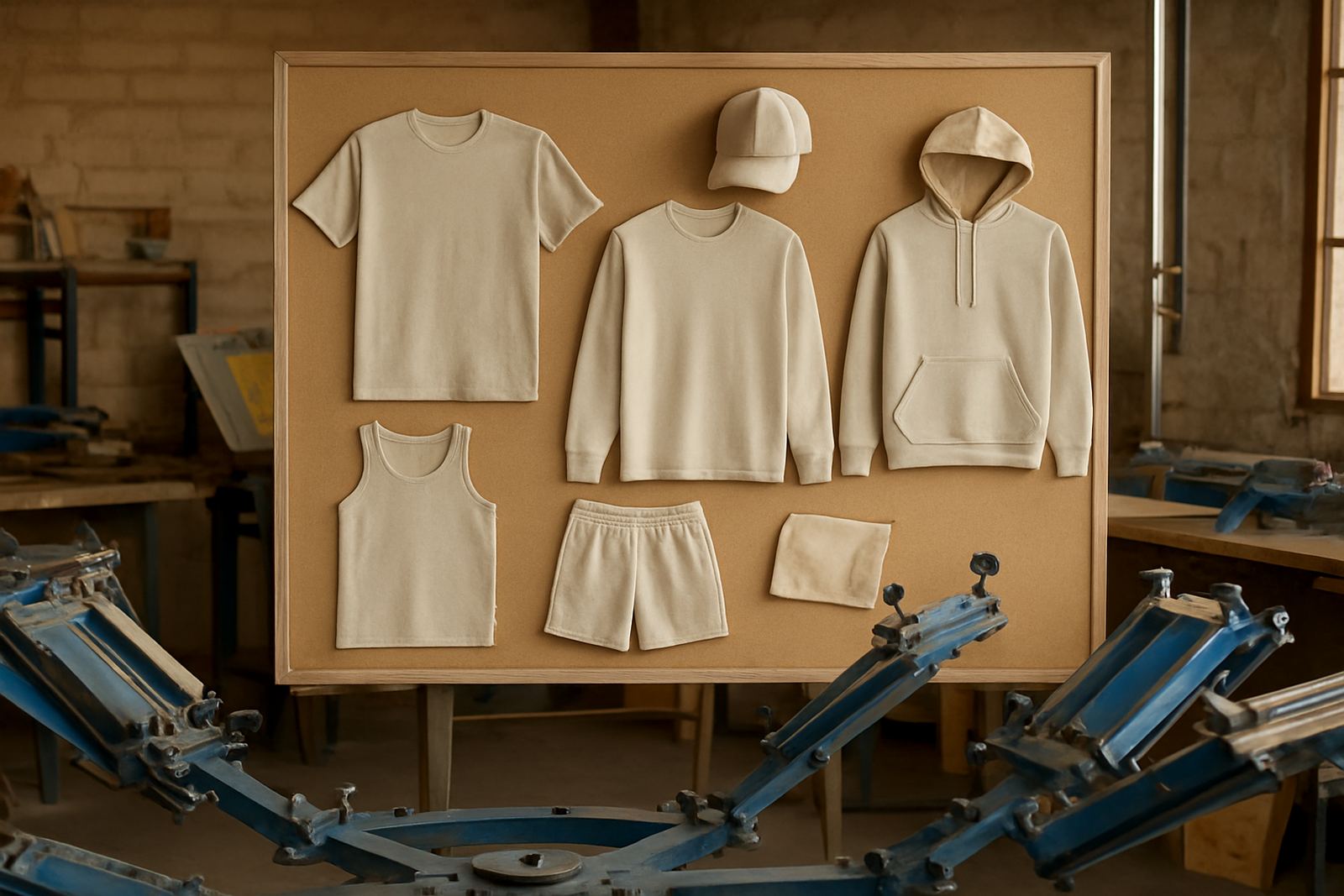
- T-shirts for events, schools and launch days
- Polos for staff, clubs and front-of-house teams
- Hoodies for winter orders and surf-town merch
- Caps for outdoor promotion and team use
- Team kit for sport, tours and club travel
Print Areas That Change the Look and Cost
Where the print sits on the garment matters almost as much as the garment itself. A small left chest print gives a neat uniform look, while an oversize back print makes a stronger statement for streetwear or event apparel. Sleeve prints and neck label prints add detail, but they also need careful planning so the garment still feels comfortable and looks balanced.
For bulk orders, the size of the print area can affect setup time, ink use and the final unit price. A simple one colour logo on the front is often the most cost-effective option, while multi-colour artwork and larger placements need more attention. We always recommend checking the final garment size range before approving artwork, because a print that works on XL may sit differently on small youth sizes.
- One colour prints for simple logos and names
- Multi-colour prints for detailed crests and artwork
- Oversize back prints for surf and street styles
- Sleeve printing for sponsors, tour marks and club detail
- Neck label prints for branded finishing touches
Artwork Tips Before You Send a File
Good artwork saves time and keeps the print sharp. Vector files are best for logos and line work, but clear high resolution artwork can also be used in many cases. If your file is blurry, too small or full of colour changes, the artwork team may need to tidy it before press day. That is why it helps to send the original file where possible, not a screenshot from a phone.
When you request a quote, include the garment type, print size, print positions and the number of colours in the design. If there are special details like a school crest, a sponsor list or a repeated member name, add that early. It avoids back and forth later and helps the production team quote properly first time.
- Send logos in a clean editable format if possible
- State the print positions you want, front, back or sleeve
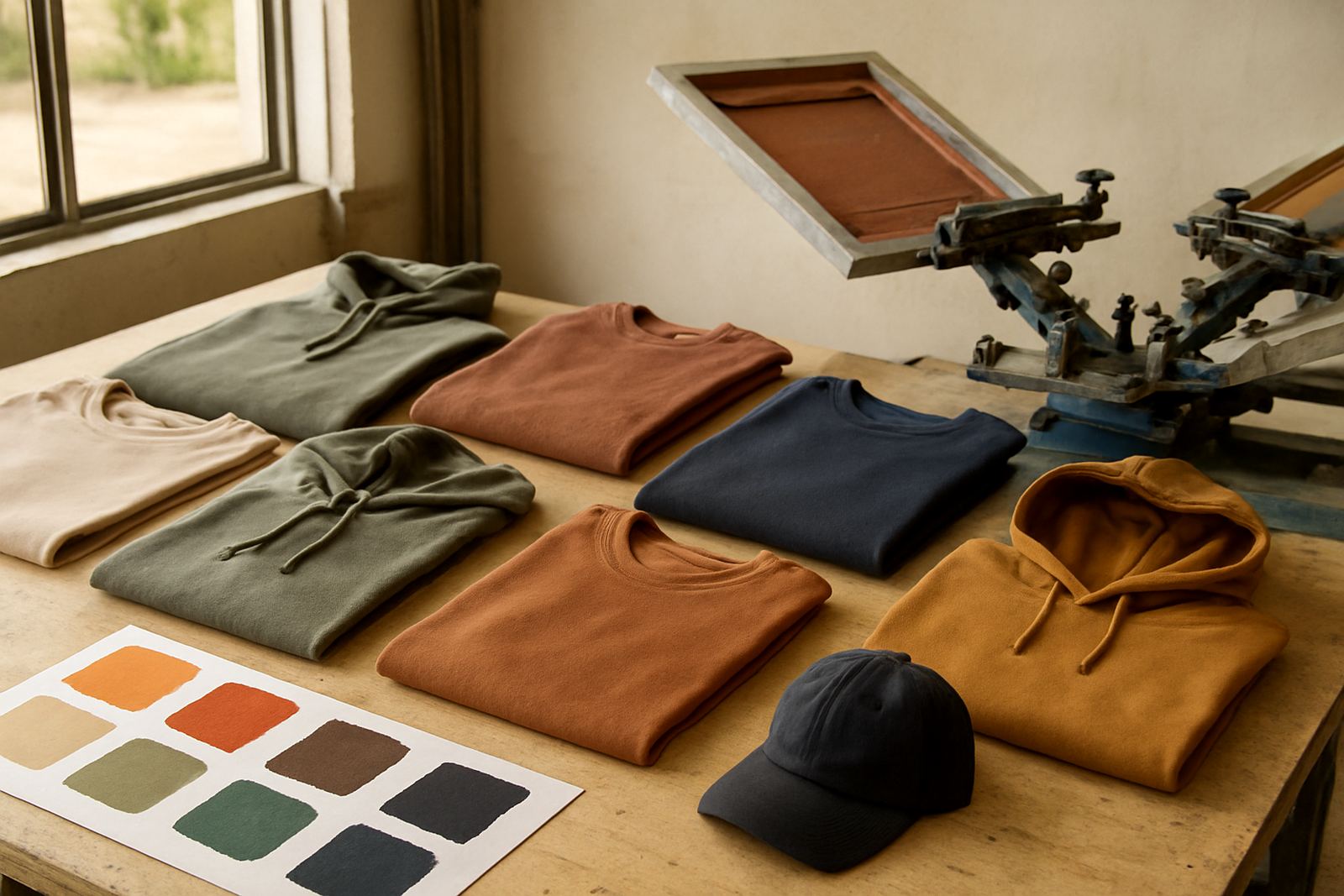
- Tell us if you need colour matching for a specific shade
- List every size and quantity in the order
- Confirm spelling for names, initials and team numbers
When to Ask for a Sample Strike-Off
A sample strike-off is useful when you want to check placement, colour or overall finish before the full run starts. This is especially helpful for first-time school orders, club kit, memorial shirts and branded clothing where the final look has to be right. It is also a smart step if the garment colour is dark, the print is very detailed, or the order is going onto mixed fabrics.
In our experience, a strike-off can prevent costly reprints on bigger jobs. It gives everyone a clear reference point and helps avoid mistakes with logo size or position. For some orders it adds an extra step, but it often saves time in the end, especially when the event date is fixed and the budget is tight.
- First orders for new clubs or companies
- Complex designs with several colours
- Dark garments that need colour testing
- Orders with sponsor logos or strict branding rules
Folding, Bagging and Bulk Packing for Distribution
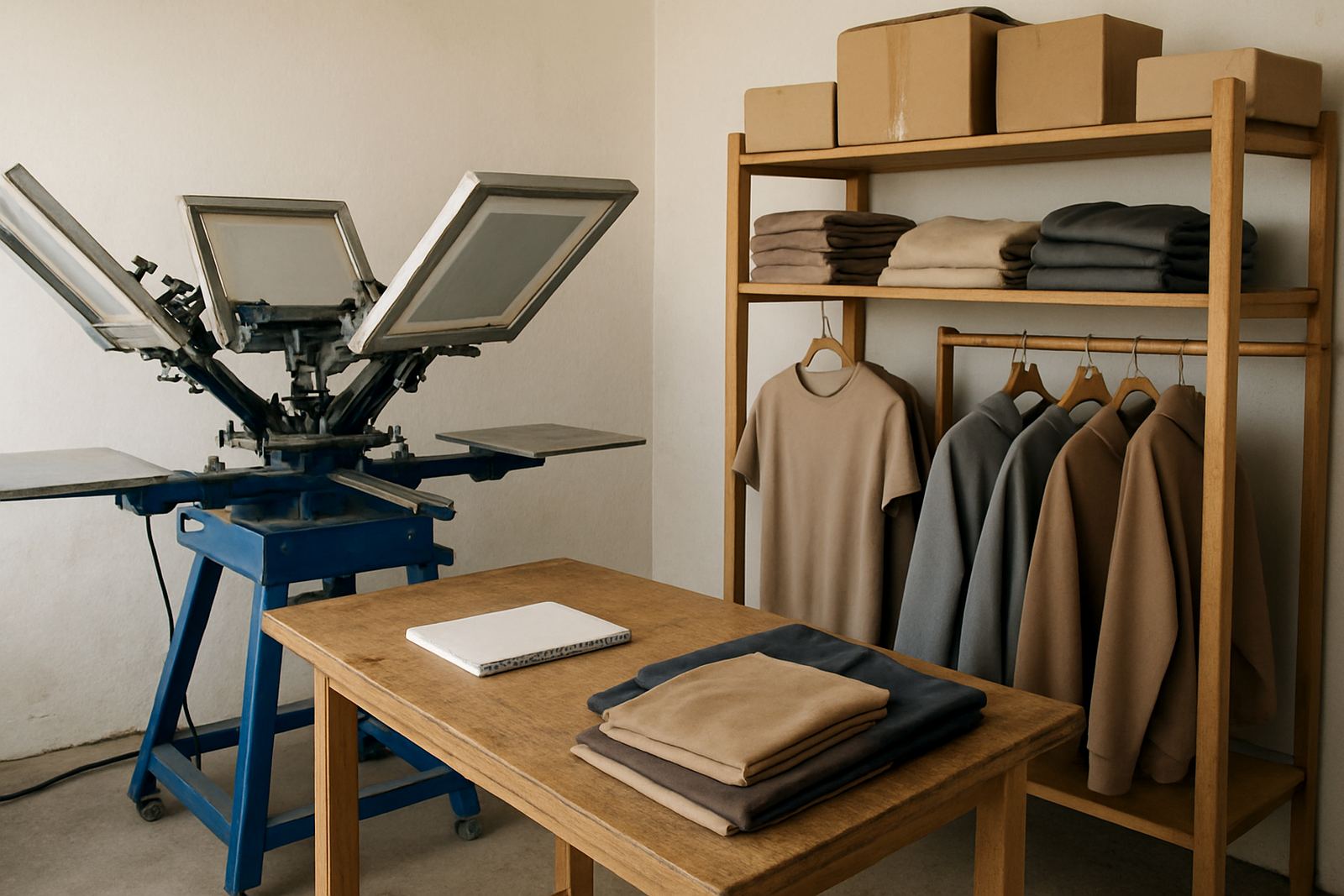
Once the printing is done, the finish matters too. Some clients need garments folded and bagged one by one for resale or handout. Others want bulk packing by size, team or department so distribution is faster on collection day. This is common for schools, sports clubs and event organisers who are moving stock between Jeffreys Bay and surrounding towns.
If you need sorted packs, tell us how the order must be grouped before production starts. That could be by size, name, team, branch or delivery batch. Proper packing saves time for your staff and keeps the order neat. It also helps when you are dealing with repeat runs, because the next order can follow the same format with less admin.
- Folded and bagged single garments
- Bulk packing by size or team
- Sorted packs for schools and clubs
- Repeat order support for regular reprints
Local Buying Notes for Coastal and Inland Orders
Garments for the Kouga coast need to cope with humidity, sand and regular washing. That means choosing fabric that holds shape, and prints that stay clear after use. For inland deliveries around Humansdorp and Kareedouw, you may also want garments that work well across cooler mornings and warmer afternoons, especially for staff who move between indoor and outdoor work.
Municipal event wear and school apparel often needs a practical balance between price, comfort and appearance. If your order is for a sports day, a community project or a local business launch, keep the design simple enough to print cleanly but strong enough to last. That is usually the sweet spot for affordable, professional clothing that still looks right after the first wash and the tenth.
Need help choosing? Browse the guides, then send your garment list and artwork details through the enquiry form on our contact page.