
Why coastal mornings call for the right hoodie weight
In Jeffreys Bay, a winter morning can feel damp and sharp, then turn mild by lunchtime. That means a hoodie has to suit layering, not just look good on a hanger. For school use or staff wear, the wrong weight can mean something that is too thin for early starts or too heavy for the classroom once the sun is out.
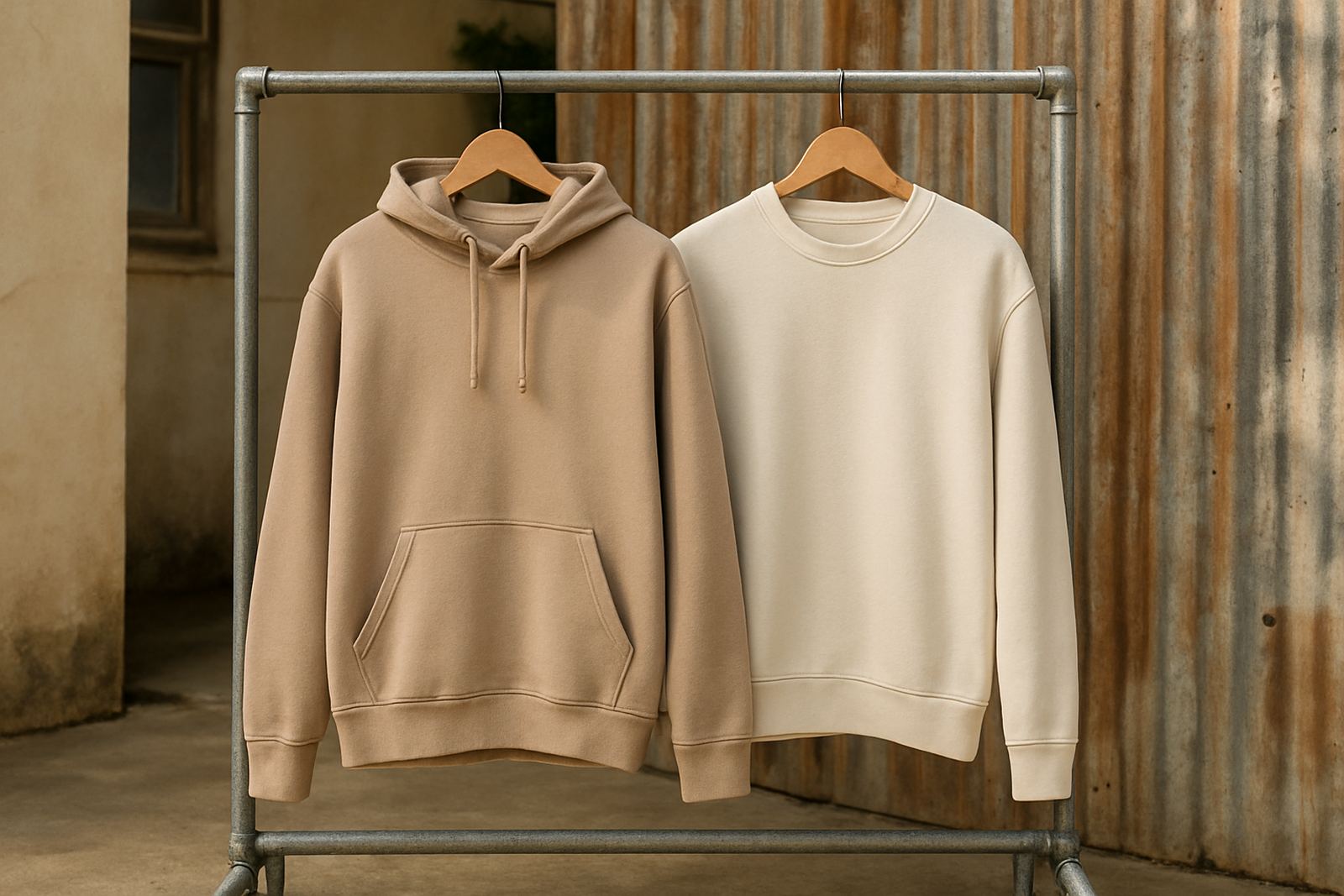
When people order hoodies for the Eastern Cape coast, they often think only about colour and logo placement. Weight matters just as much. A midweight hoodie usually gives enough warmth for school gates, sports days and early travel between Jeffreys Bay and Gqeberha, without becoming bulky in a bag or locker. For coastal humidity, the inside finish also matters because a soft brushed lining can feel warmer and more comfortable on cold mornings.
It is also worth thinking about washing. Hoodies used for school or club wear are washed often, sometimes three or four times a week. A practical choice is one that keeps its shape around the cuffs, hem and hood after repeat washing, because that is where cheaper garments show wear first.
Fabric choices that hold up to school and club use
For printed hoodies, the fabric blend affects both comfort and print quality. A cotton-rich hoodie usually feels softer and breathes better, while a blended garment can dry faster and keep its shape a bit better after regular use. For coastal towns like St Francis Bay and Oyster Bay, that balance matters when garments are worn between sea air, school transport and afternoon sport.
Before placing an order, ask how the hoodie will be used. A school choir hoodie, for example, may only be worn at events, while a team hoodie or club hoodie may be used every week. That changes the best fabric and the best print position. If the garment is for younger learners, a lighter weight can also help with comfort in the classroom.
- Check the fabric blend and ask how it feels after repeated washing.
- Look at cuff and hem construction so the hoodie does not stretch out early.
- Choose a weight that suits early mornings, not just midday wear.
- For younger learners, avoid oversized fits that make the garment difficult to manage.
In our Jeffreys Bay industrial area base, we regularly see orders where the hoodie itself was chosen before the use was clearly defined. That often leads to rework. A better approach is to match the garment to the routine, whether that is classroom wear, sports travel or an event weekend in Humansdorp.
Print placement that makes sense on a hoodie
Hoodies are not flat like T-shirts. The hood, pouch pocket, seams and zip styles all affect where a logo or message should go. A front chest print can be neat and easy to wear, while a large back print works well for clubs, festivals and school groups that need to be seen from a distance. On some hoodies, a sleeve print or neck label print adds a cleaner finish without making the garment feel overdone.
Artwork size matters as much as colour. A bold team name across the back can work well for school sport, but a detailed logo may need simplification so it prints clearly on fleece or brushed fabric. For small run orders, it is worth approving a sample strike-off before the full batch is printed. That small step helps avoid issues with spacing, sizing and colour contrast.
- Front left chest is suitable for staff wear and school identity.
- Oversize back prints suit events, tours and club hoodies.
- Sleeve printing can add a year, slogan or sponsor name.
- Neck label prints are useful for a cleaner branded finish.
Our artwork coordinator checks how each design will sit on the actual garment, not just on the screen. That includes how the hood hangs, where the seam falls and whether the logo needs to shift a few centimetres for better balance. Small adjustments make a big difference to the final look.
Colour, contrast and local school colours
Colour choice is often driven by school colours, club identity or sponsor branding, but it should also work with the fabric itself. Light ink on a dark hoodie is easy to read, while dark ink on a navy or black garment can disappear if the contrast is too low. For Eastern Cape schools and clubs, this becomes important when there are multiple names, numbers or sponsors on one garment.
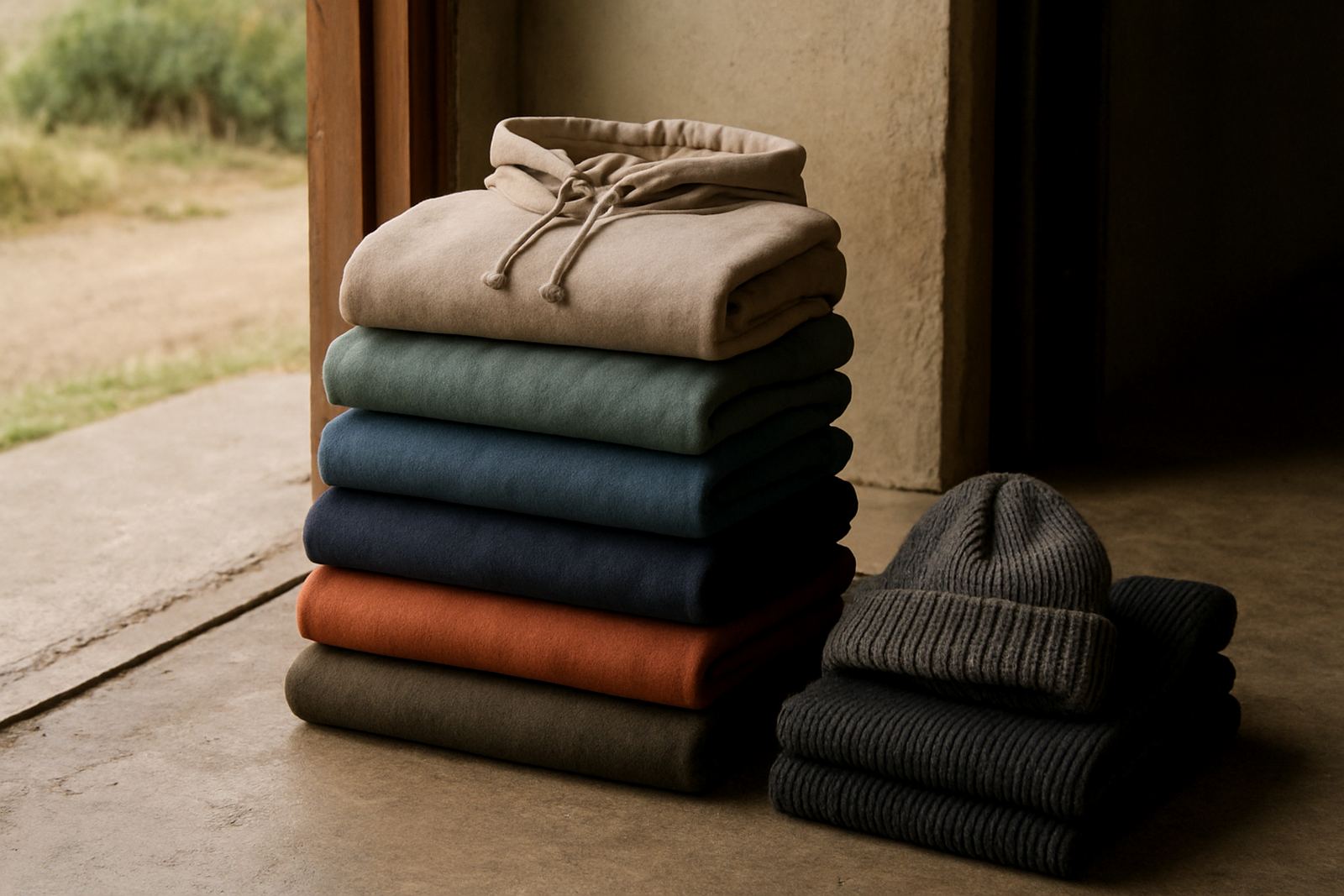
Some colours also show wear more quickly than others. Pale hoodies can show dirt around cuffs and pockets, while very dark shades may show lint more easily in coastal areas. For event wear and learner hoodies, a medium shade can be a useful middle ground. It looks neat, carries print well and often keeps a cleaner appearance through the term.
If you are ordering for several branches, such as Jeffreys Bay, Humansdorp and Kareedouw, keep the colour decision simple. One strong base colour with consistent print placement usually works better than trying to force too many variants into one order. It also helps with repeat orders later in the year.
Sizing for learners, teams and staff
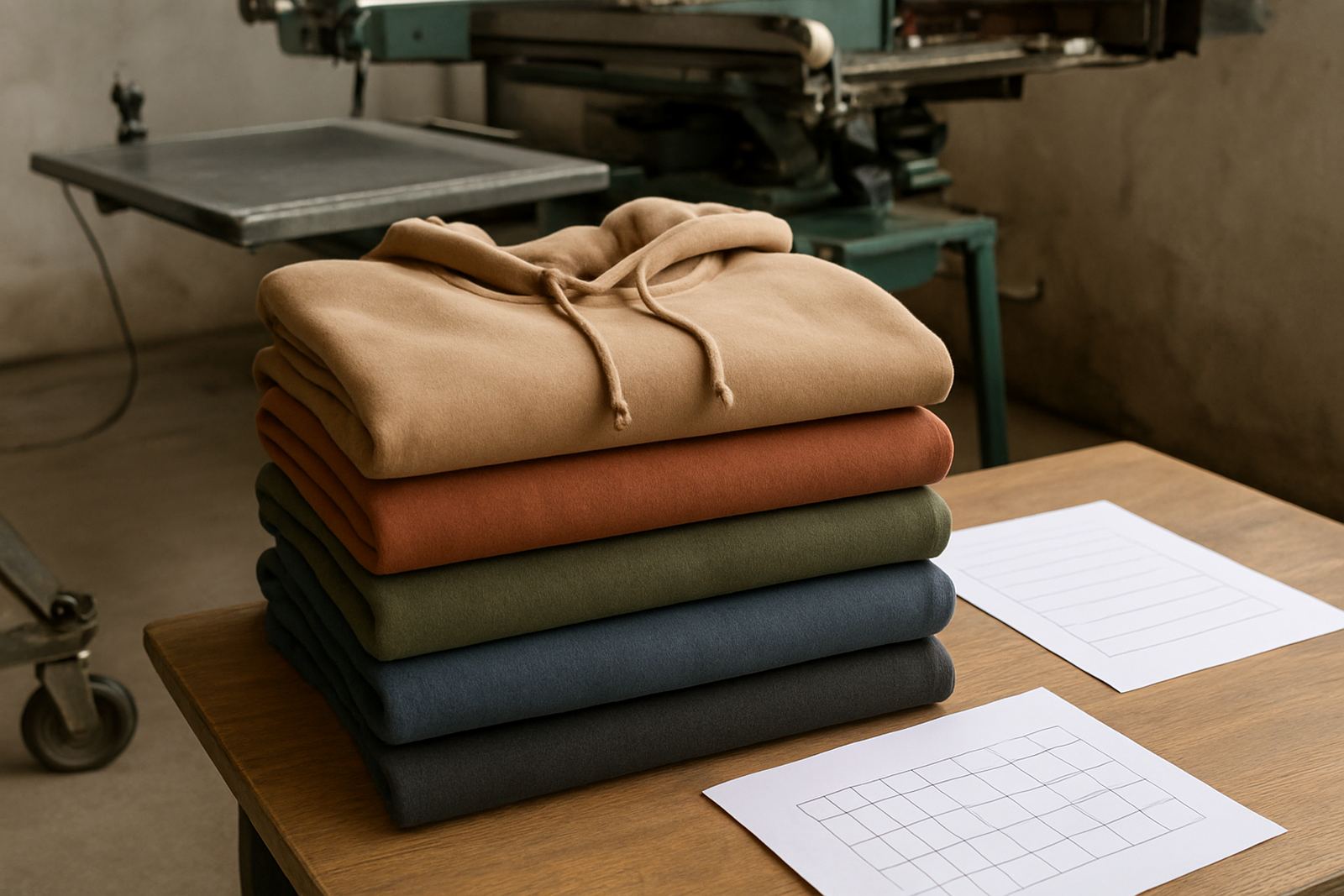
Hoodie sizing can create problems if it is guessed. Learners want comfort and room to grow, while coaches and staff usually want a neater fit. For bulk orders, especially school or club orders, it is best to collect sizes in a clear list and check them before production starts. That saves time and avoids the common issue of too many smalls or too few larges.
For school use, a size range should allow for different body shapes across age groups. For event wear, a slightly looser fit can help people layer over T-shirts. If the hoodie is for coastal mornings, a bit of extra room is practical, because many people will wear it over another layer before the day warms up.
- Use a size chart for the full order, not just rough estimates.
- Separate learner, youth and adult sizes clearly.
- Allow extra stock for late additions or new members.
- Check whether the hoodie is meant for layering or standalone wear.
Leandi Smit often works through size breakdowns with clients before quotes are finalised, because one wrong size split can affect the whole pack. A good order sheet keeps the process simple and helps the finishing team sort, fold and bag each garment properly.
What to expect from a hoodie order in Kouga
For schools, clubs and local businesses in the Kouga region, a practical hoodie order should be straightforward from quote to collection. The important parts are clear artwork, confirmed sizes, print method, turnaround time and packing requirements. If the order is going to different destinations, such as St Francis Bay and Gqeberha, that needs to be planned early so the packs are labelled correctly.
Repeat orders are common with hoodies because once a school or club finds the right style, they usually want the same garment again the next term or season. Keeping the original artwork and print setup on file makes that easier and reduces the risk of colour mismatch later on. It also helps when there is a second order for new learners, new members or a different event group.
Bulk packing and folding also matter. Some groups want hoodies bagged individually for resale or distribution, while others need them packed by size. That is the sort of detail that saves time on collection day and avoids confusion at the last minute. In our finishing area, each order is checked before it leaves the workshop so the count, size split and print placement are in order.
For winter wear in Jeffreys Bay, the best hoodie is the one that fits the climate, the budget and the routine. Get those three right, and the garment will work long after the first cold snap has passed.