
Start With the Job Your Shirts Must Do
Cafe work is not the same as office wear. Staff move between the counter, kitchen pass, coffee machine and outdoor seating, often in warm rooms with steam, oil and constant hand washing around them. A good shirt must handle that pace without stretching out, fading too fast or becoming uncomfortable by lunch time.
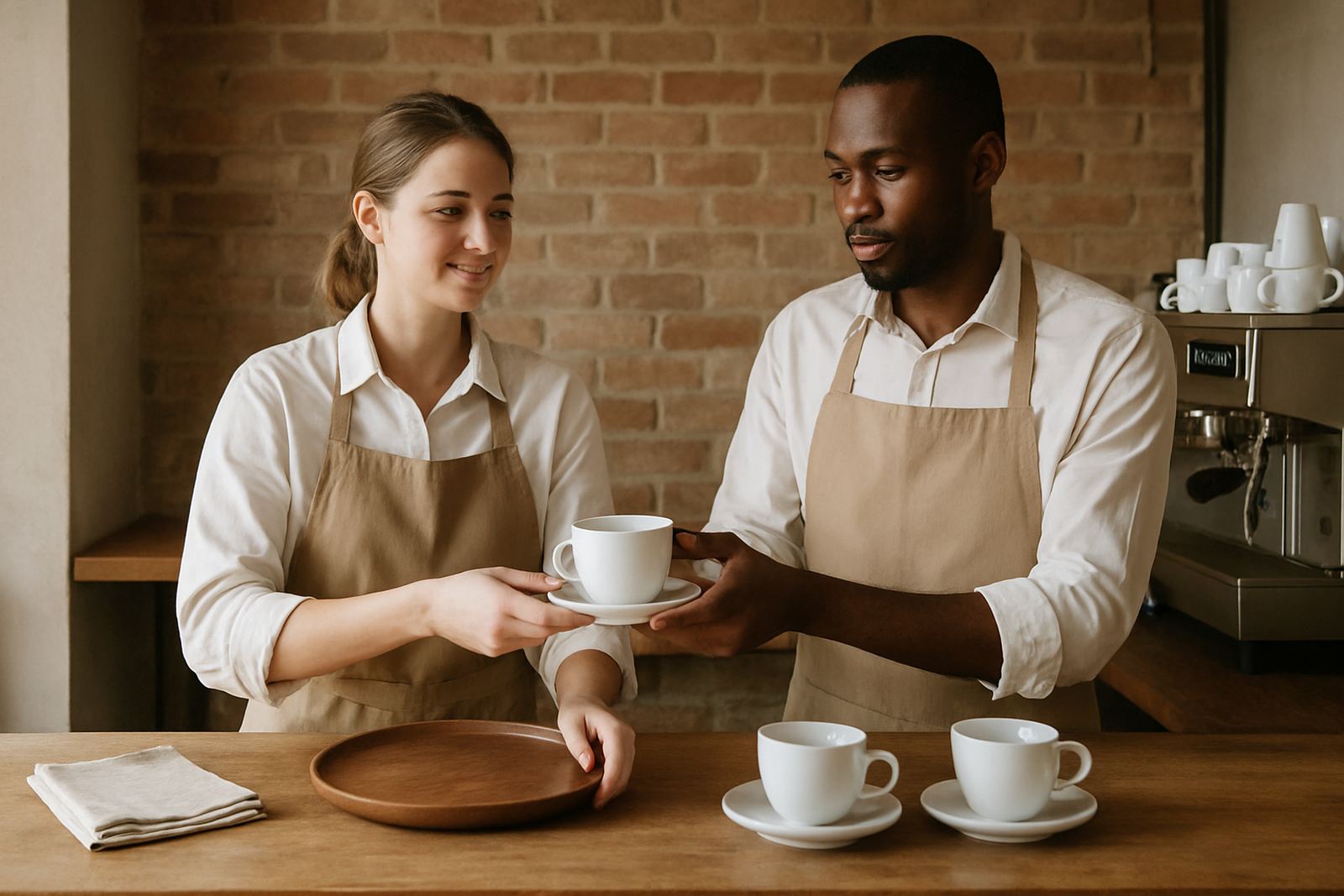
In Jeffreys Bay, many cafes also deal with coastal humidity, salty air and open doors that stay open for foot traffic. That means you want garments that dry well, hold their shape and still look neat after regular washing. If your team wears aprons over the shirt, the print should sit where it will still be seen and not rub away too quickly.
- Choose fabric that breathes well for hot prep areas.
- Keep the cut practical so staff can bend, lift and reach.
- Think about colour choices that hide light marks and coffee splashes.
Fabric Choices That Suit Cafe Shifts
Cotton is comfortable and feels good on the skin, but it can hold moisture and take longer to dry. A cotton-rich blend is often a better option for cafe staff because it gives a softer feel while adding some strength and quicker drying. For heavier use, a fabric that keeps its shape after repeated washes is worth more than a very cheap shirt that goes thin after a few months.
For front-of-house staff, polo shirts and neat crew shirts are common because they look tidy and are easy to layer with aprons. For cooks, prep staff and baristas working in warmer spots, lighter weight shirts can make a real difference. Sleeves should be long enough to stay practical, but not so loose that they get in the way near hot equipment.
- Lightweight cotton blends suit indoor hospitality work.
- Short sleeves are usually easier for hot service areas.
- Dark colours often hide marks better than pale ones.
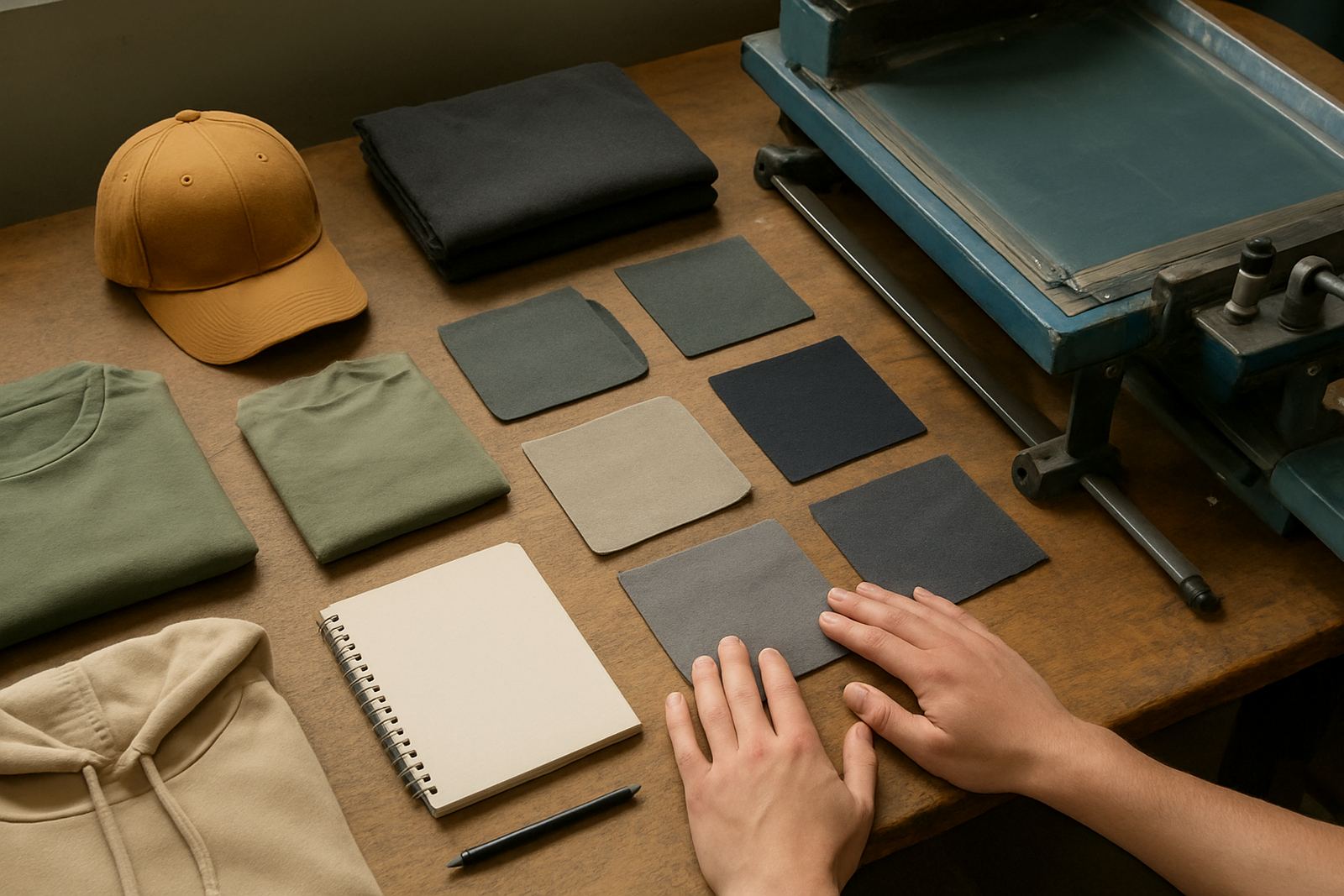
- Ask for samples if you are choosing between fabric weights.
Print Placement That Stays Visible Behind Aprons
In a cafe, the apron covers more than people realise. A logo on the centre chest may disappear under straps or a bib apron, so placement matters. For most teams, a left chest print, sleeve print or a small neck label print gives better visibility while still keeping the shirt plain enough for daily wear.
If you want stronger brand presence, a back print can work well for staff moving around the floor or serving outside. Oversize back prints suit casual cafe wear, event days and promotional shirts, while smaller prints are more suitable for everyday uniforms. The print should match how the shirt is actually worn, not just how it looks on a sample alone.
- Left chest prints work well for logos and names.
- Sleeve prints can add identity without crowding the shirt.
- Back prints suit larger branding for busy service teams.
- Neck label prints are useful on repeat uniform orders.
Colour Matching for a Clean, Trusted Look
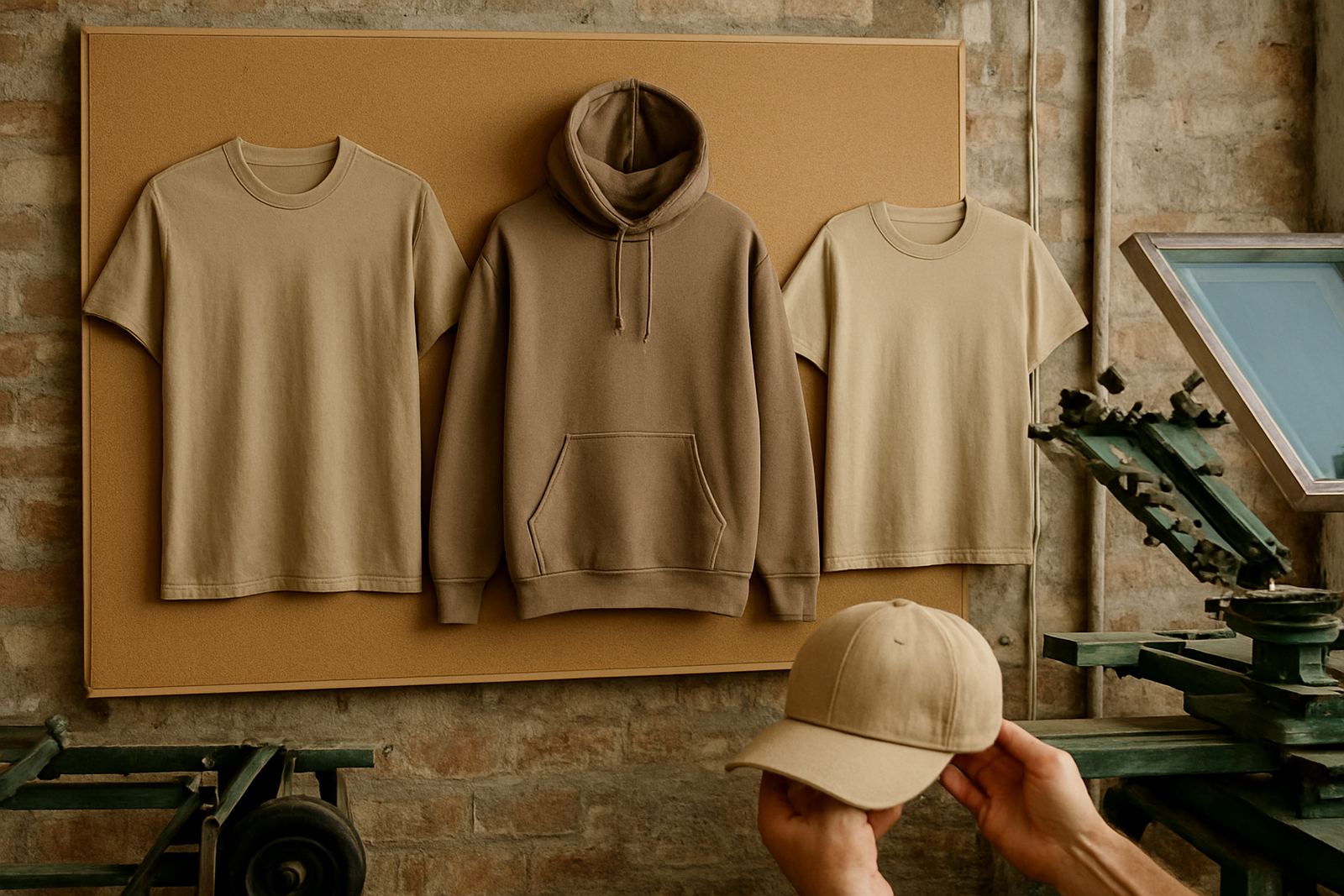
A cafe shirt should support the feel of the business. Soft earth tones, black, navy, white and charcoal are common because they pair well with aprons and do not fight with the rest of the uniform. If your cafe has a coastal style, you can still use brighter colours, but keep the print legible and the overall look calm enough for daily wear.
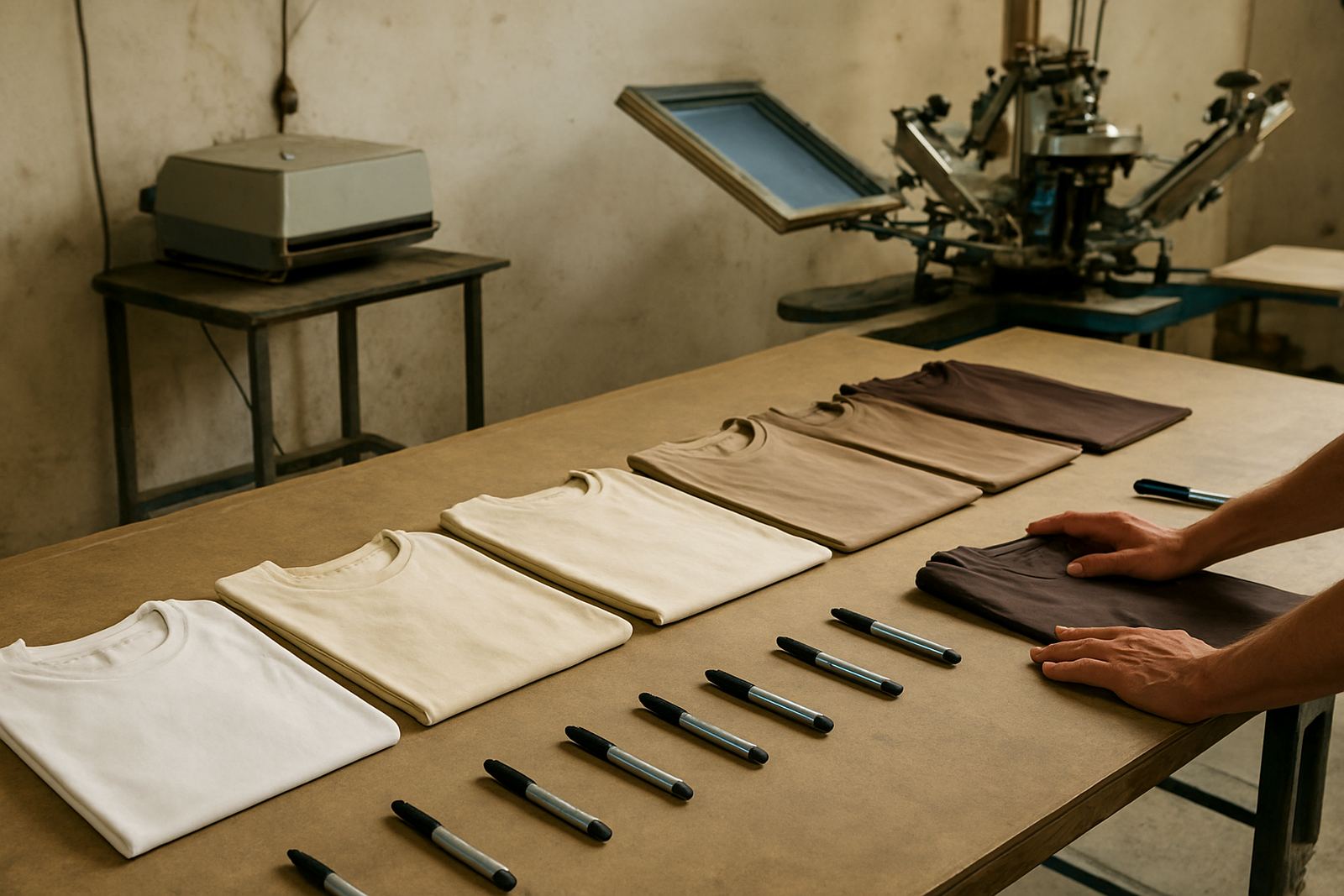
Colour matching is also important when staff wear mixed garments from different batches. If the shirts are not matched properly, the team can look uneven. A simple print proof and sample strike-off help to check how the logo sits on the actual shirt colour before a full run is done. That saves disappointment and keeps the order consistent.
- Pick shirt colours that suit the shop interior and apron colour.
- Use high contrast print colours for easier reading.
- Check the logo on the exact garment colour before bulk printing.
- Keep seasonal changes small if you want a consistent team look.
What Works Best for Washing, Rewear and Bulk Orders
Cafe shirts get washed often, sometimes after every shift. That means the print method needs to cope with regular laundering, heat from ironing and the general wear of a busy hospitality environment. A properly set screen print is usually a good choice for bulk orders because it gives even coverage and suits repeat runs when the same artwork is used again.
If you are ordering for a team that changes over time, it helps to keep the artwork on file and use the same print position again. That way new staff can be matched to the existing uniforms without starting from scratch. Folding and bagging also makes distribution easier when you have multiple branches or mixed sizes.
- Ask for repeat order support if staff numbers change often.
- Keep a size breakdown so reorders stay accurate.
- Choose a print style that holds up to regular washing.
- Bagged and folded shirts save time on handover day.
A Local Example From Jeffreys Bay and the Kouga Area
A small cafe in Jeffreys Bay with indoor seating, takeaway orders and weekend beach traffic may want a simple black polo with a left chest logo and a small sleeve mark. The front staff can wear aprons over it, while the print still shows clearly when they step out to greet customers or carry trays. For a Humansdorp or St Francis Bay team, the same shirt style can be used across branches with only a size mix changing from site to site.
That approach keeps the order practical and affordable. It also helps managers avoid overthinking the uniform. One shirt, one clear print position and a colour that works with aprons is often better than trying to squeeze too many details into a garment that staff will wear all day. In a busy food environment, simple usually lasts longer and looks better after repeated use.
Our team in the Jeffreys Bay industrial area handles artwork setup, colour matching, sample strike-offs, screen printing and finishing for food and beverage uniforms. That includes local orders for Jeffreys Bay, Humansdorp, St Francis Bay, Cape St Francis, Oyster Bay, Kareedouw and Gqeberha, with support for schools, clubs and event teams too.