
Start with garments people will wear again
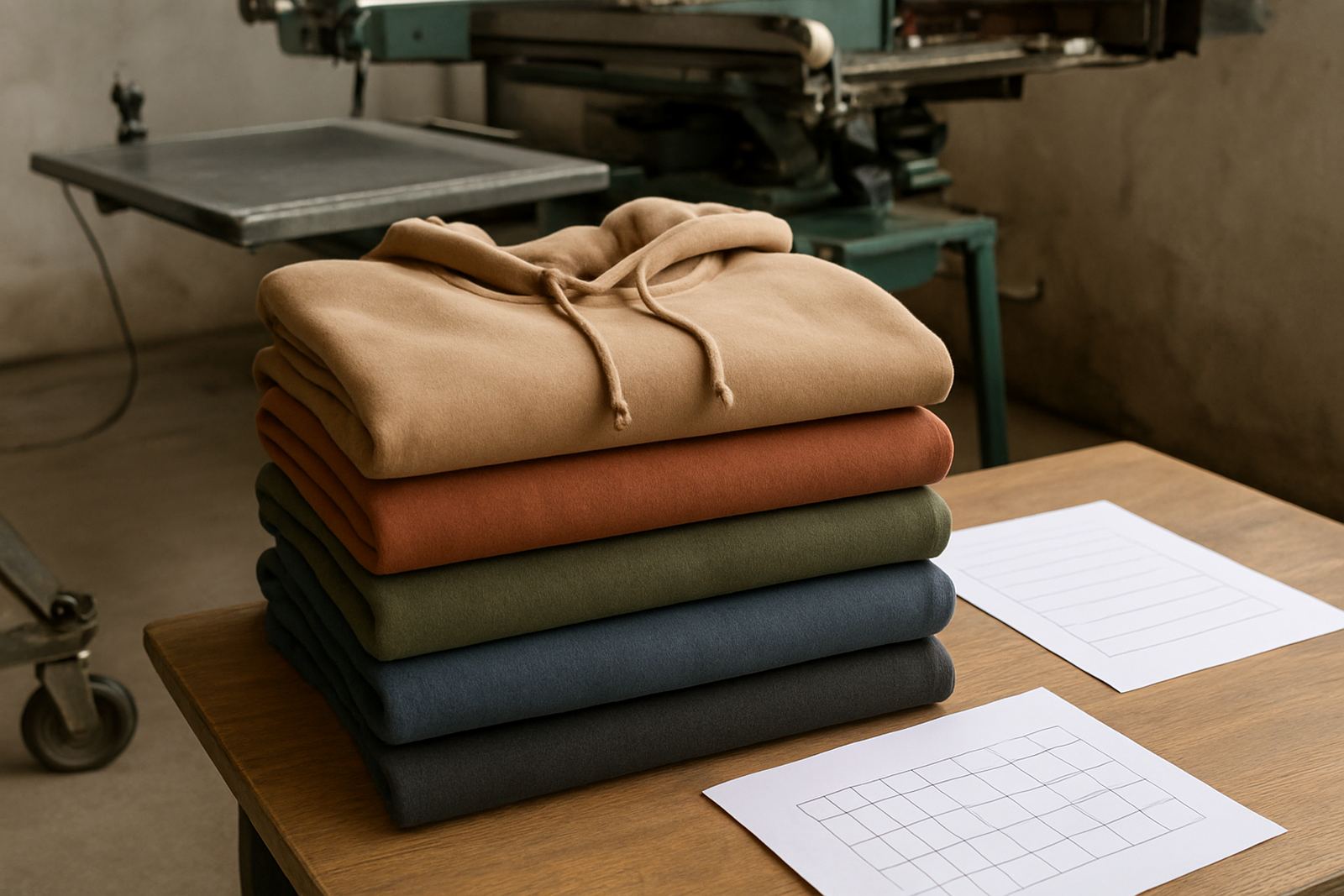
Merch only sells when it fits local habits. In surf towns and school communities, people want items they can wear on a windy afternoon, to a fund-raiser, or on the road to a weekend tournament. That means choosing T-shirts, hoodies, caps and team kit that feel comfortable in the Eastern Cape heat but still work when the weather turns cool near the coast.
At our Jeffreys Bay industrial area base, we often see the same mistake: a group spends money on a clever slogan or a good logo, then puts it on a garment nobody wants to wear twice. Simple cuts, sensible colours and wearable sizes do more for sales than overcomplicated ideas. If your item can be worn after the event, it has a better chance of selling out.
Choose print methods that match your order size
Small labels and clubs do not always need huge quantities. Some need 20 shirts for a launch, others need 80 hoodies for a school tour, and some only want a few test pieces before they commit. The print method should suit the quantity, the number of colours and the way the garment will be used.
- One colour prints work well for clean logos, sponsor wear and club shirts.
- Multi-colour prints suit event merch where the artwork must stand out.
- Oversize back prints are useful for bold branding at markets and matches.
- Sleeve printing and neck label prints help when you want a more complete branded finish.
- Sample strike-offs help you check colour, placement and size before the full run.
For groups in Humansdorp, St Francis Bay or Gqeberha, the point is simple: choose the print style that fits the budget and the purpose. That keeps the final price realistic and the stock easy to move.
Sell with a clear story, not just a logo
People buy local merch when they know what they are supporting. A club shirt tied to a season, a school hoodie for a tour, or a surf-town cap for an annual event gives the buyer a reason to choose it over something generic. The story should be short and plain. Tell people who it supports, where the money goes, and why the item matters.
We have seen better sales when the garment is linked to a real local purpose. For example, a Jeffreys Bay youth sports group selling printed T-shirts for a fundraiser can explain that each shirt helps cover transport and kit costs. That kind of message works because buyers understand exactly what their Rand is doing.
Do not try to say everything at once. A strong logo, one short line, and a clean back print are often enough. If the design is too busy, buyers hesitate and stock sits longer than it should.
Plan sizes, colours and stock before you print
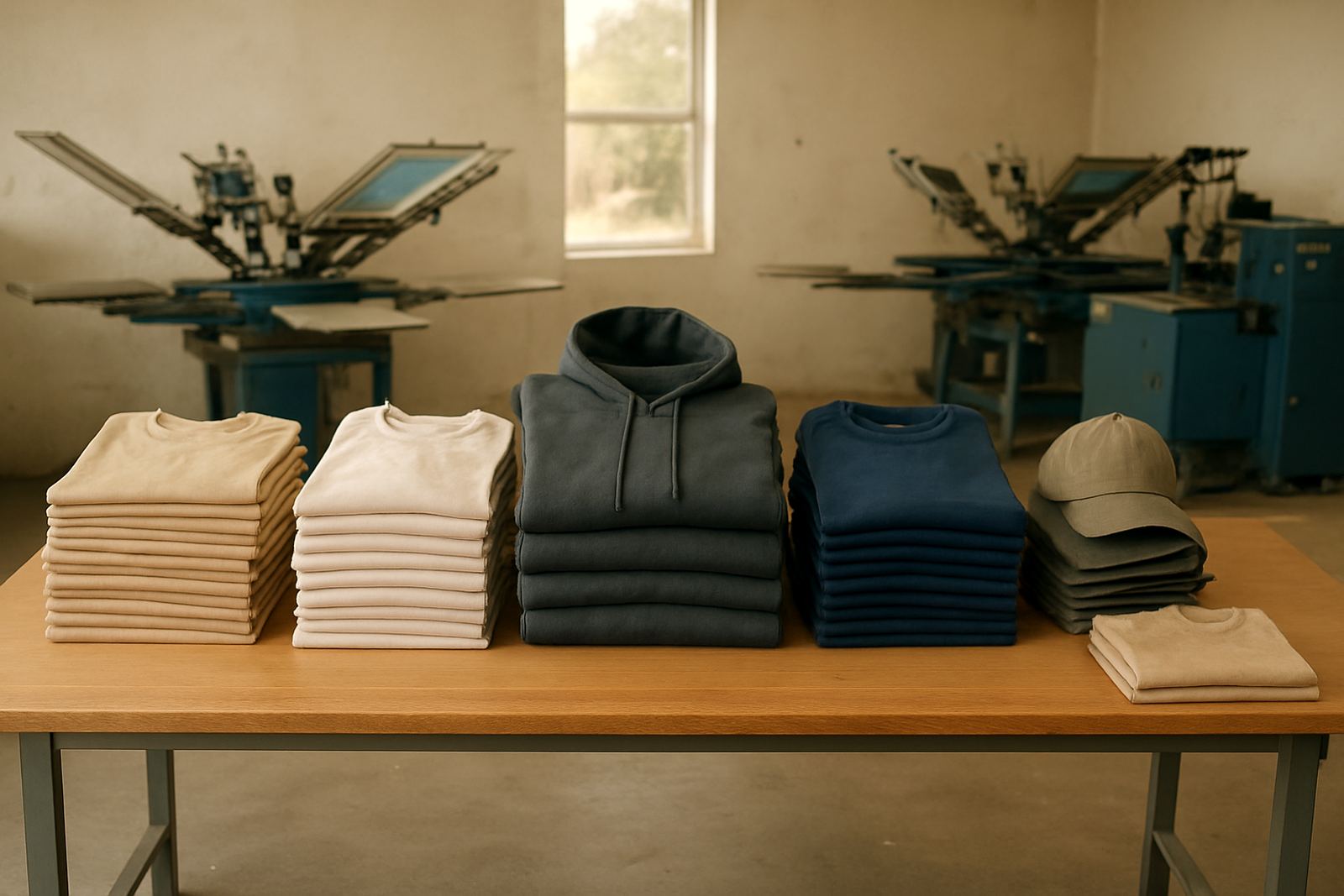
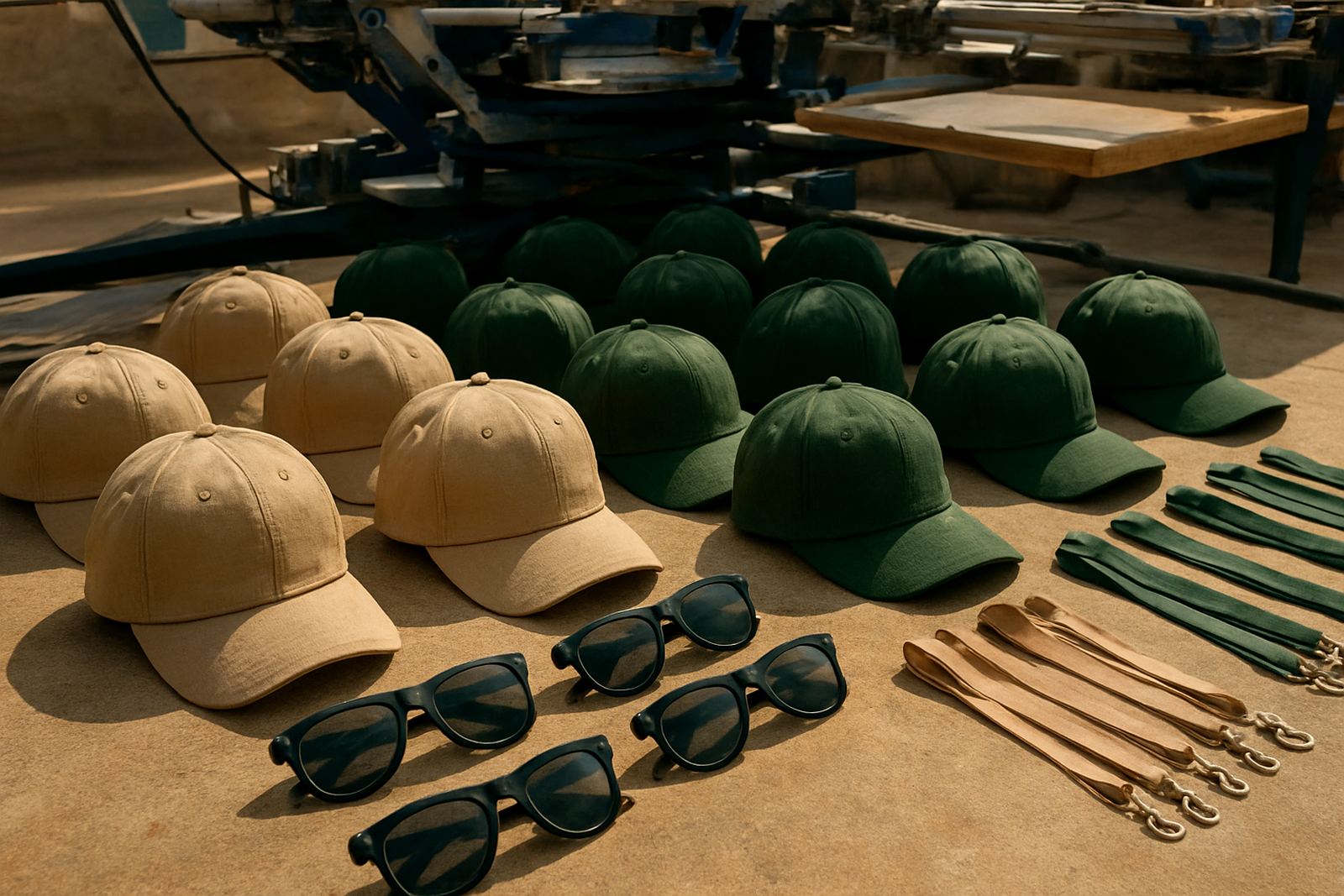
Merch that actually moves is usually planned with the end buyer in mind. A club might need more medium and large sizes than extra smalls. A school might need a wider spread for staff and parents. A surf event may need more caps and lighter T-shirts than heavy hoodies. The more carefully you plan, the less dead stock you carry.
- Ask who the garment is for, then build the size run around that group.
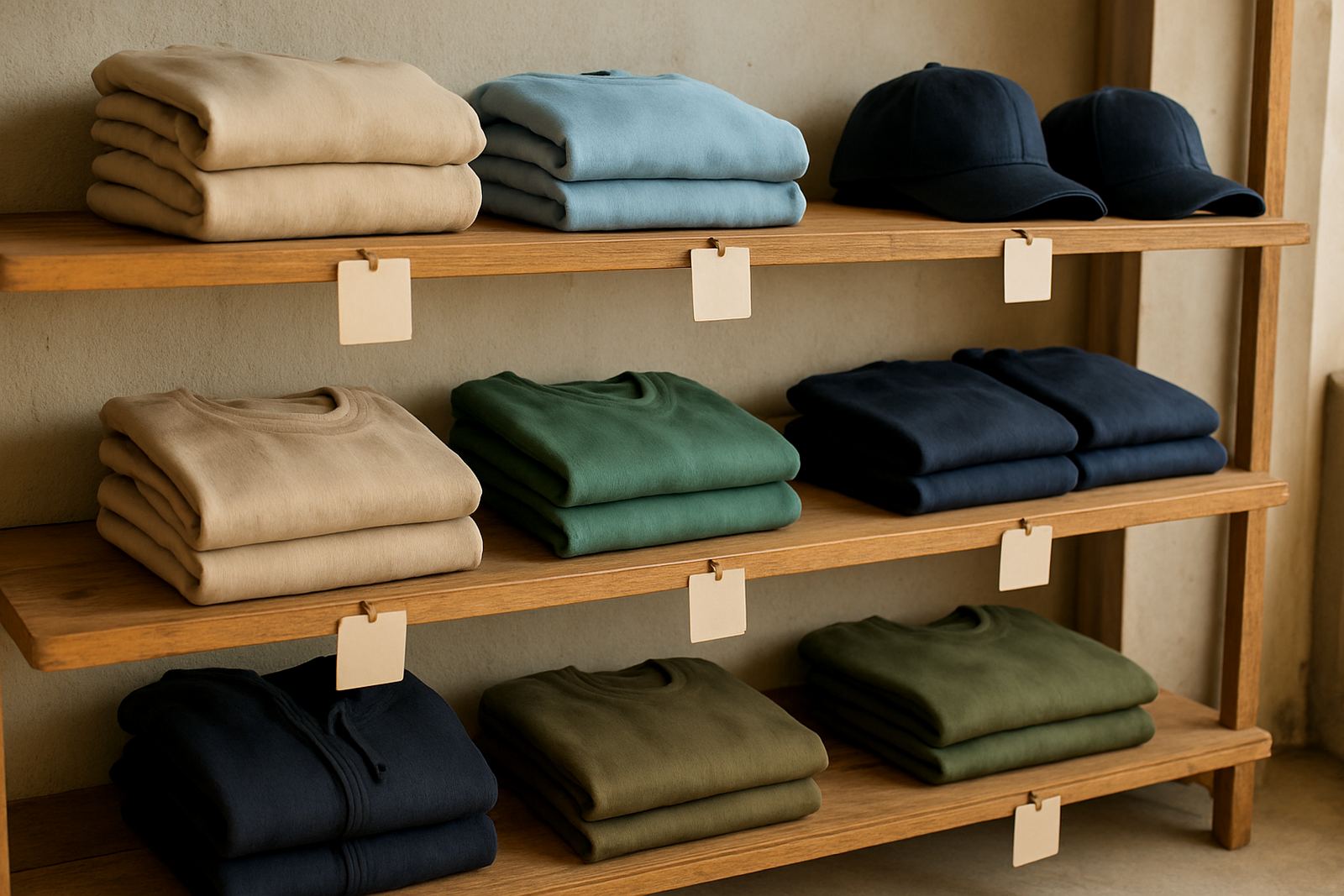
- Keep colours limited if you want to hold stock without too many variants.
- Check whether the item needs packing, folding and bagging for resale.
- Use repeat order support when the same design needs topping up later.
Colour matching matters too. A brand colour that looks right on screen can print differently on cotton, polycotton or fleece. It is worth checking a sample first rather than guessing and hoping it matches. That small step saves reprints and keeps the merch looking professional.
Think about weather, washing and coastal wear
Jeffreys Bay and the surrounding coast bring salt air, humidity and a fair amount of sun. That affects how apparel ages. If a shirt is going to be worn often, printed often and washed often, the garment and print need to cope with that reality. Lightweight fabrics are good for summer events, but hoodies and caps should still hold their shape after regular use.
For clubs and small labels, the aim is to sell something that keeps looking good after the first wash. It helps to choose garments that can handle repeated wear, and to use print placements that do not crack or peel after a few cycles. A good-looking sample is useful, but a garment that still looks decent after three months is what keeps people recommending it.
This is especially important for teams and schools in coastal towns where items are often worn outdoors, packed into bags and used again the next week. Simple care instructions can help too, such as washing inside out and drying out of direct sun.
Use local lead times to your advantage
Being local helps when you need a fast turnaround for a market, tournament or school event. If you are based in Kouga, you do not want to wait days for a small correction that should have been caught early. Working with a local print team means artwork changes, sample approvals and repeat orders can move faster.
That matters when deadlines are close. A club in Oyster Bay may need packs ready before a Saturday event. A school in Kareedouw may need team wear folded and bagged for distribution. A small label in Gqeberha may want a second run of the same design because the first batch sold out quicker than expected.
Local service also makes it easier to keep things practical. If the artwork needs adjusting, the size run changes, or the print placement needs another look, the process is simpler when everyone is working from the same region and understands the pace of local events.
What helps merch move the quickest
In the end, the best-selling local merch is usually the simplest. It has a clear purpose, a wearable garment, a fair price and a design people feel comfortable wearing after the event is over. That is true for surf-town brands, school groups and clubs alike.
If you are testing the market, start small, check the sample, and learn what sizes and colours people actually ask for. Then reorder the items that move and stop wasting money on the ones that do not. That kind of planning keeps the stock lean and the cashflow healthier, simpley because you are printing what people want rather than guessing.
For Jeffreys Bay businesses and organisations, selling merch locally is less about chasing trends and more about using practical apparel that fits the town, the weather and the people who will wear it.