
Why colour matters before the first person arrives
Volunteer shirts do more than identify a group. They help people understand who is there to guide them, who handles queues, and who to ask when there is a problem. At a community event in Jeffreys Bay, a clear colour split can make the difference between a calm entrance and a bottleneck near the gate.
In practical terms, colour is a tool for crowd guidance. Bright shirts can mark marshals, neutral colours can suit setup crews, and a darker shirt can work well for sanitation teams or late-day shifts. When every role looks the same, people waste time looking for the right helper, and that slows everything down.
- Bright colours are easy to spot from a distance.
- Consistent colours reduce confusion across shifts.
- Simple colour coding helps new volunteers get in step quickly.
Choosing colours that work in the Eastern Cape climate
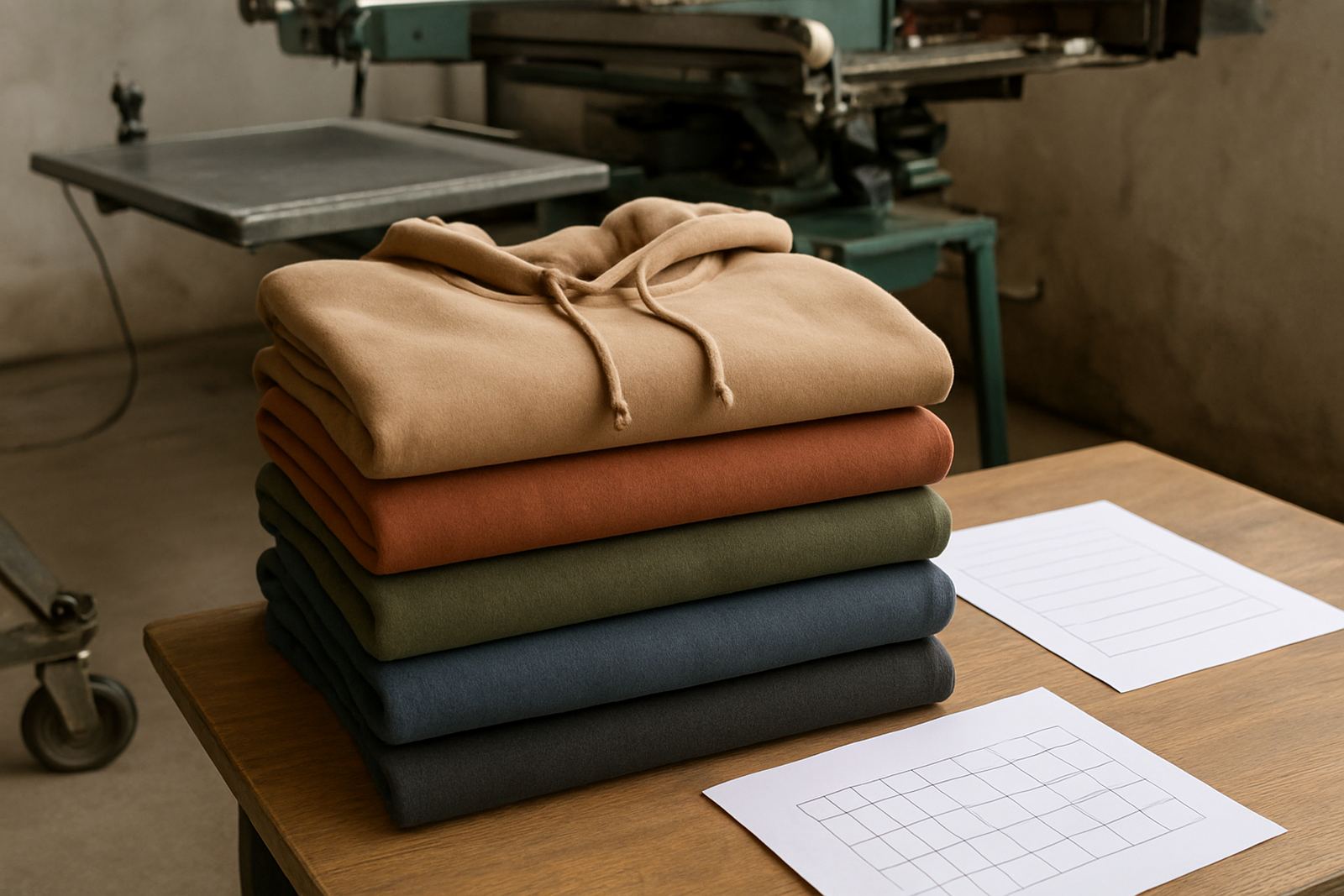
Our coast brings strong sun, sea air and plenty of dust on windy days. Light colours like white, yellow and sky blue stay cooler in hot weather, while mid-tones hide marks better during a full day outdoors. If volunteers will be near food, sand or wet grass, that practical side matters as much as how the shirt looks.
For events in Humansdorp or Oyster Bay, where people may move between open fields and shaded areas, the shirt colour should still read clearly in changing light. A fluorescent tone can stand out at a sports field, but a stronger solid colour may be better for a school fundraiser or church bazaar where you want a cleaner finish and a calmer feel.
- White and light grey suit summer events and high heat.
- Yellow, orange and lime improve visibility in busy areas.
- Navy, red and black hide wear better for repeated use.
- Choose one main colour and repeat it across all volunteer teams.
Use colour codes to separate roles without confusion
The best volunteer shirt plan is simple. One colour for registration, another for traffic marshals, another for food service, and a separate colour for cleanup. That way, people know who does what at a glance. It also makes it easier for the event organiser to check if every area is covered.
For a school rugby day in St Francis Bay, for example, green shirts could identify field marshals, blue shirts could mark ticketing and white shirts could cover hospitality. If you add a small printed role line on the back or sleeve, you make the system even clearer. The colour does the first job, the print does the second.
- Registration: one colour that stands out near the entrance.
- Security or marshals: one colour seen easily from across the site.
- Food team: a different colour to reduce mix-ups near serving tables.
- Cleanup crew: a practical colour that can take dirt and dust.
Printing methods that keep colours sharp and readable
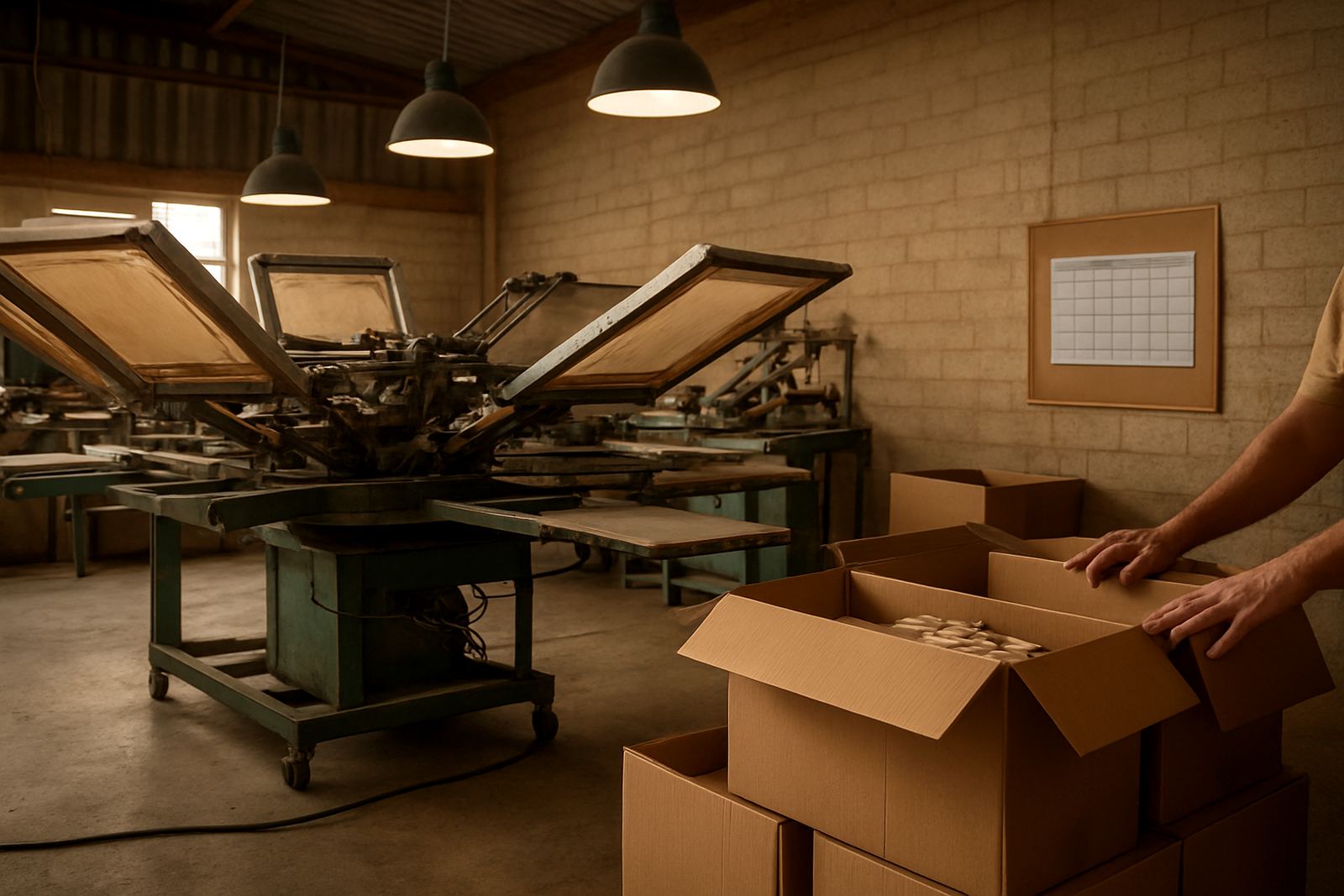
Strong shirt colour only works if the print can still be read against it. Dark shirts need light print colours, and light shirts need bolder contrast. Screen printing is a practical option for volunteer shirts because it gives clean text, clear logos and consistent colour across a large batch.
For one colour names, role titles or event slogans, a single bold print is usually enough. If you need more detail, such as a logo plus sponsor names, multi-colour printing can still stay neat when the artwork is prepared correctly. We also recommend sample strike-offs when the shirt colour is important to the crowd plan, because a small change in shade can affect visibility.
If the order needs to move quickly, keep the artwork simple and the shirt colours limited. That helps with repeat orders too, since a school or club can order the same set again for the next event without changing the system. It saves time and makes the team look organised every time.
A local example from a Jeffreys Bay event
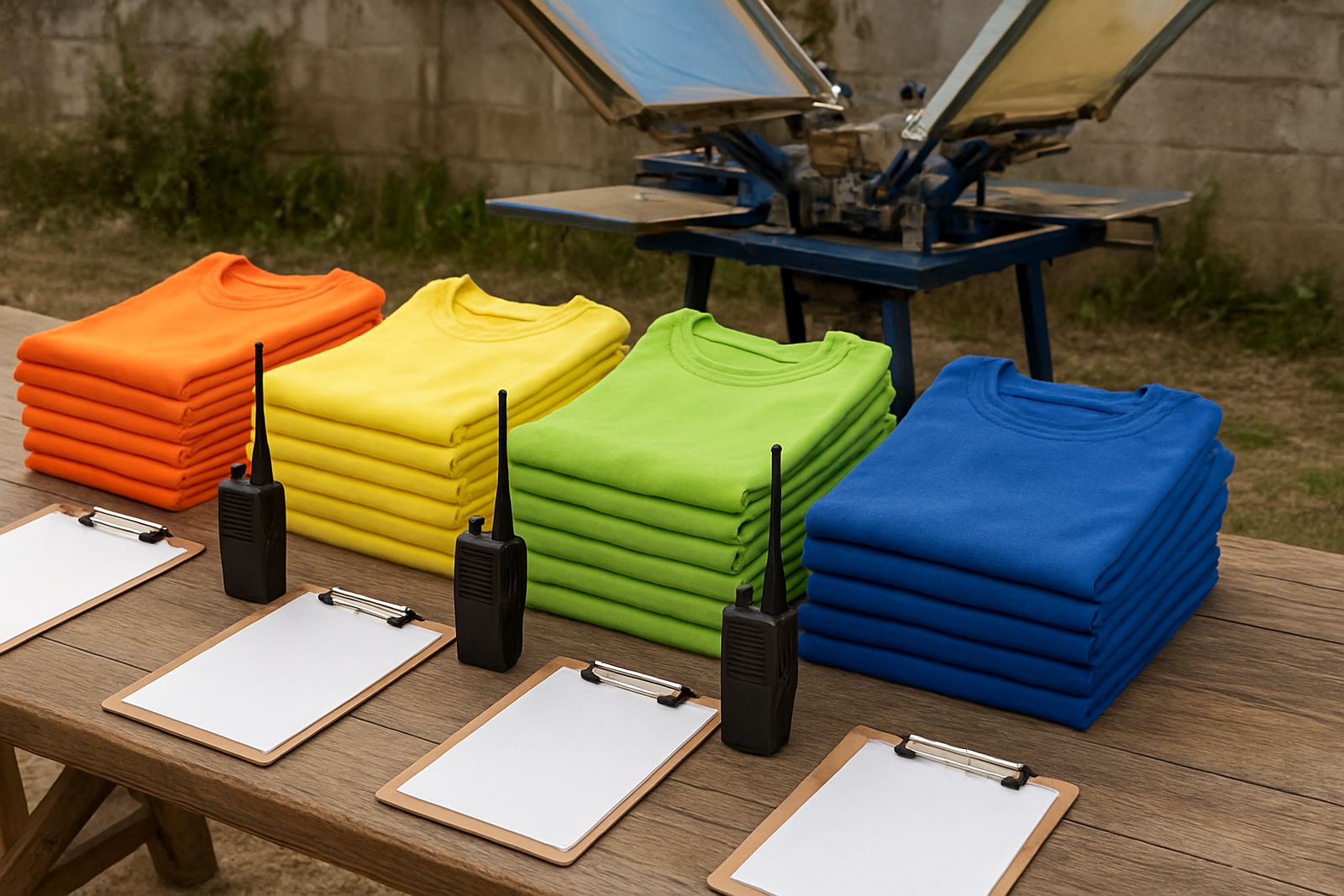
At a coastal volunteer day in the Kouga area, the organiser needed different teams to manage parking, sign-in, recycling and child supervision. The site was open to sun and sea wind, and people were arriving in waves. The fix was simple: bright orange for parking marshals, blue for sign-in, green for recycling and yellow for child supervision.
Because the colours were assigned before the event started, guests could find help without asking three different people first. The marshals moved faster, the sign-in line stayed orderly, and parents knew exactly who to approach if they needed assistance. It was a small change, but it took pressure off the organisers and kept the day moving.
That same approach works in Humansdorp, Cape St Francis and Gqeberha too. Whether the event is on a school field, in a church hall or at a beach cleanup, shirt colour can do a lot of the guiding before a single word is spoken.
Planning an order that suits your volunteers and your budget
When ordering volunteer shirts, think about how many roles you need, how often the shirts will be worn, and whether the team needs short sleeves, hoodies or caps as well. It is often better to order one practical colour per role than to spread the budget across too many shades that are hard to manage.
Keep the order easy to repeat. Choose colours that are easy to source again, sizes that cover your full team and a print layout that stays consistent. Folding and bagging can help if shirts are being handed out to different sites or volunteers are collecting them at different times. For larger events, bulk packing by team makes distribution much quicker.
- Match the colour to the job, not just the event theme.
- Keep printing readable from at least a few metres away.
- Use the same colour plan for repeat events where possible.
- Allow for extra shirts in case of late volunteers or replacements.