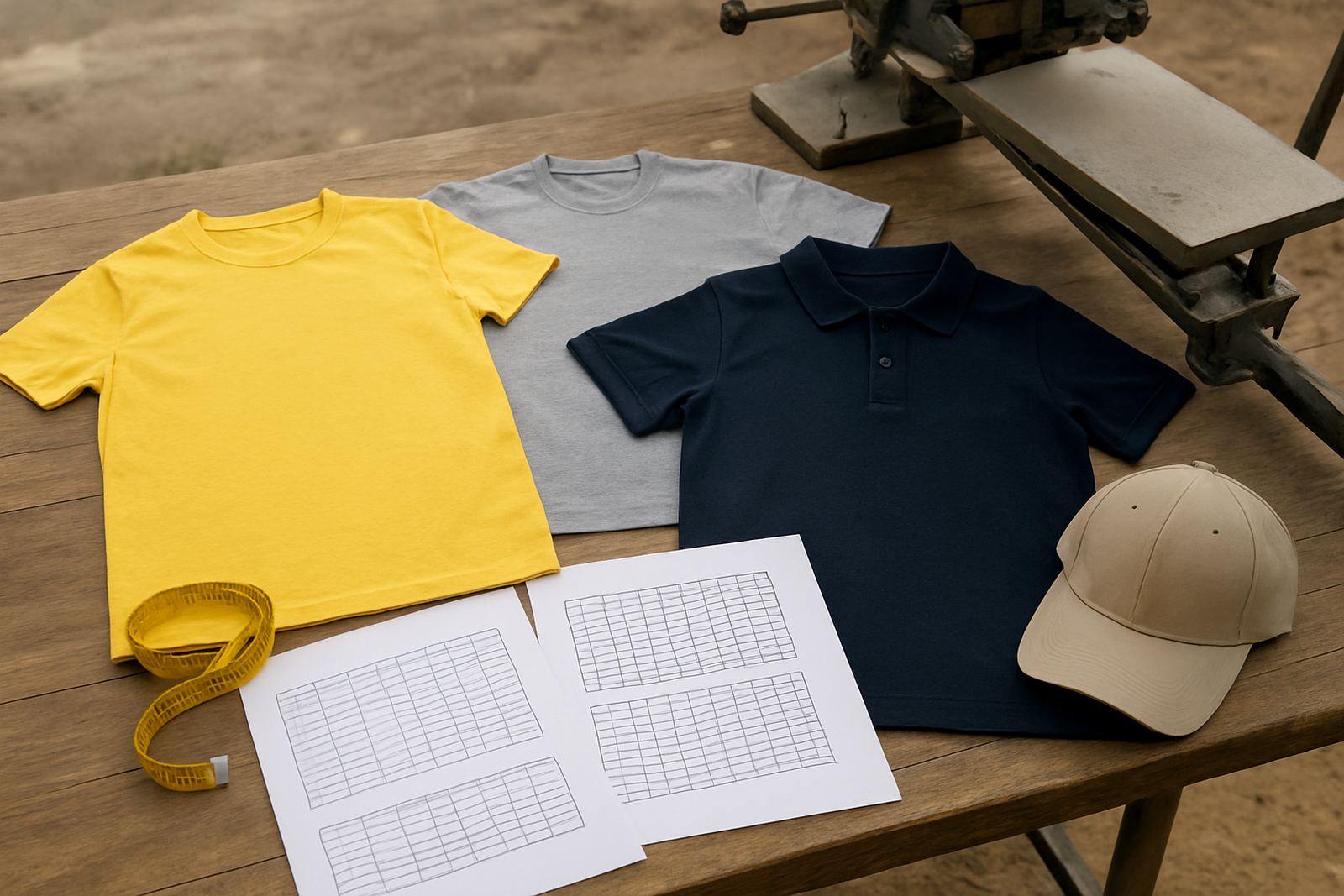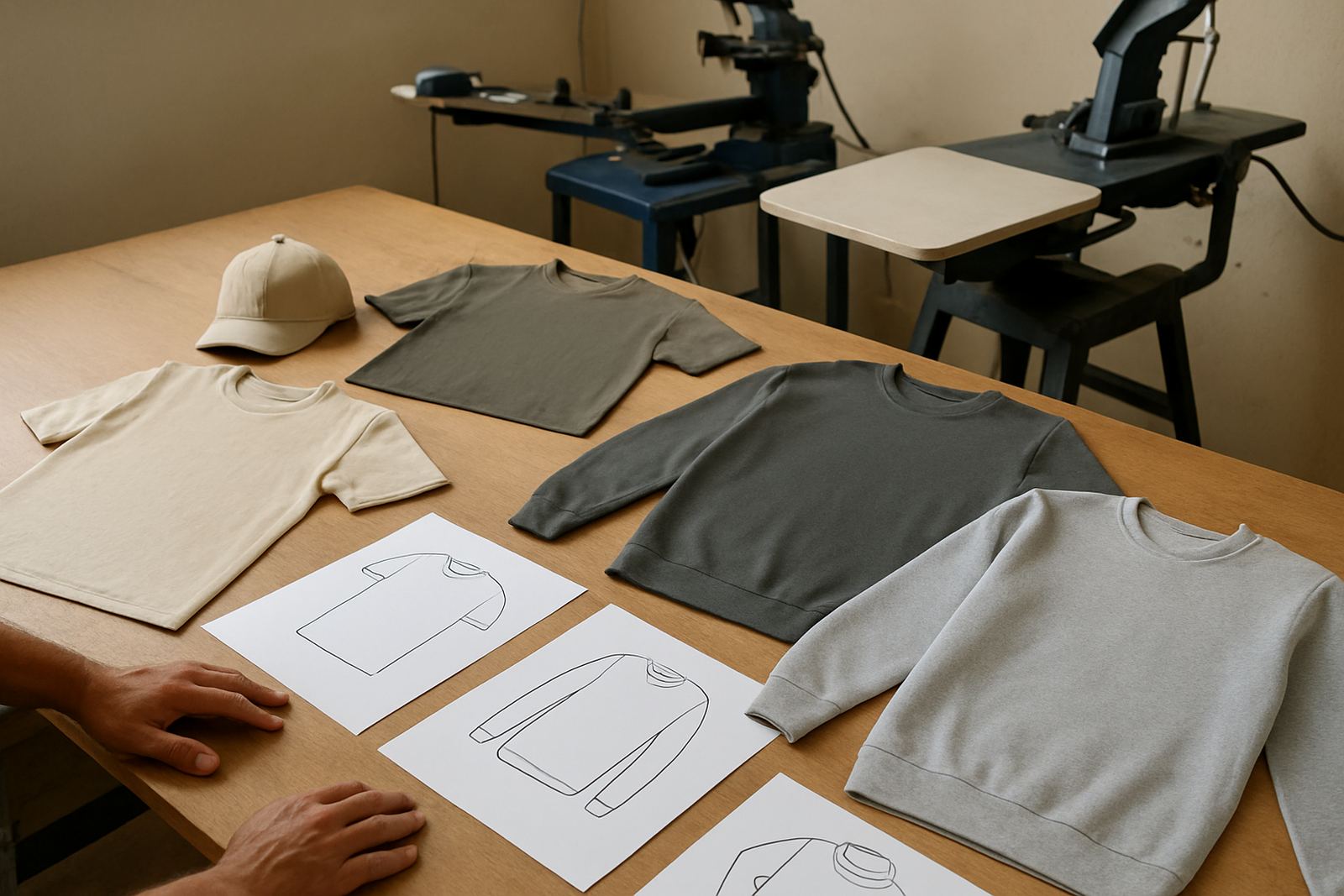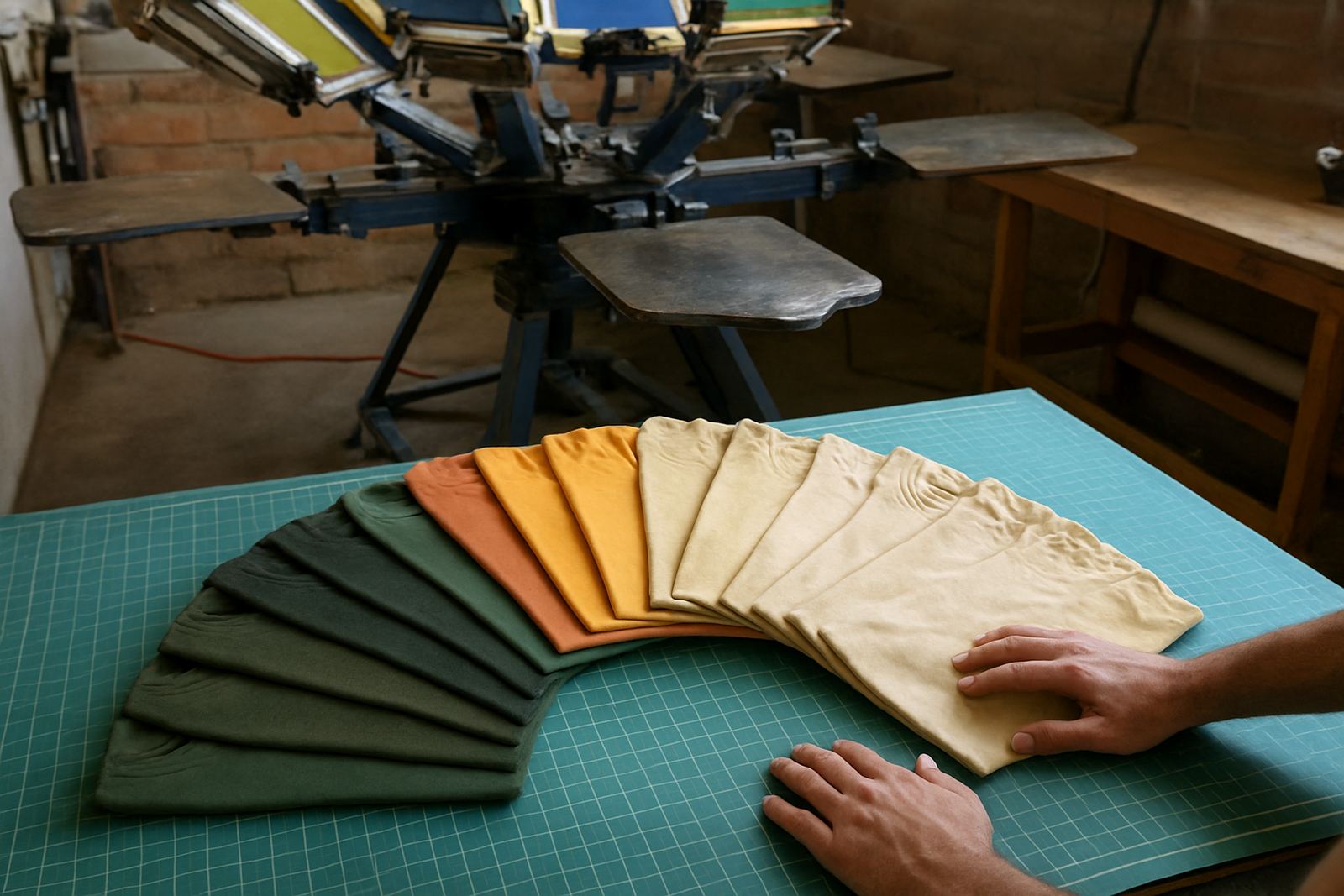

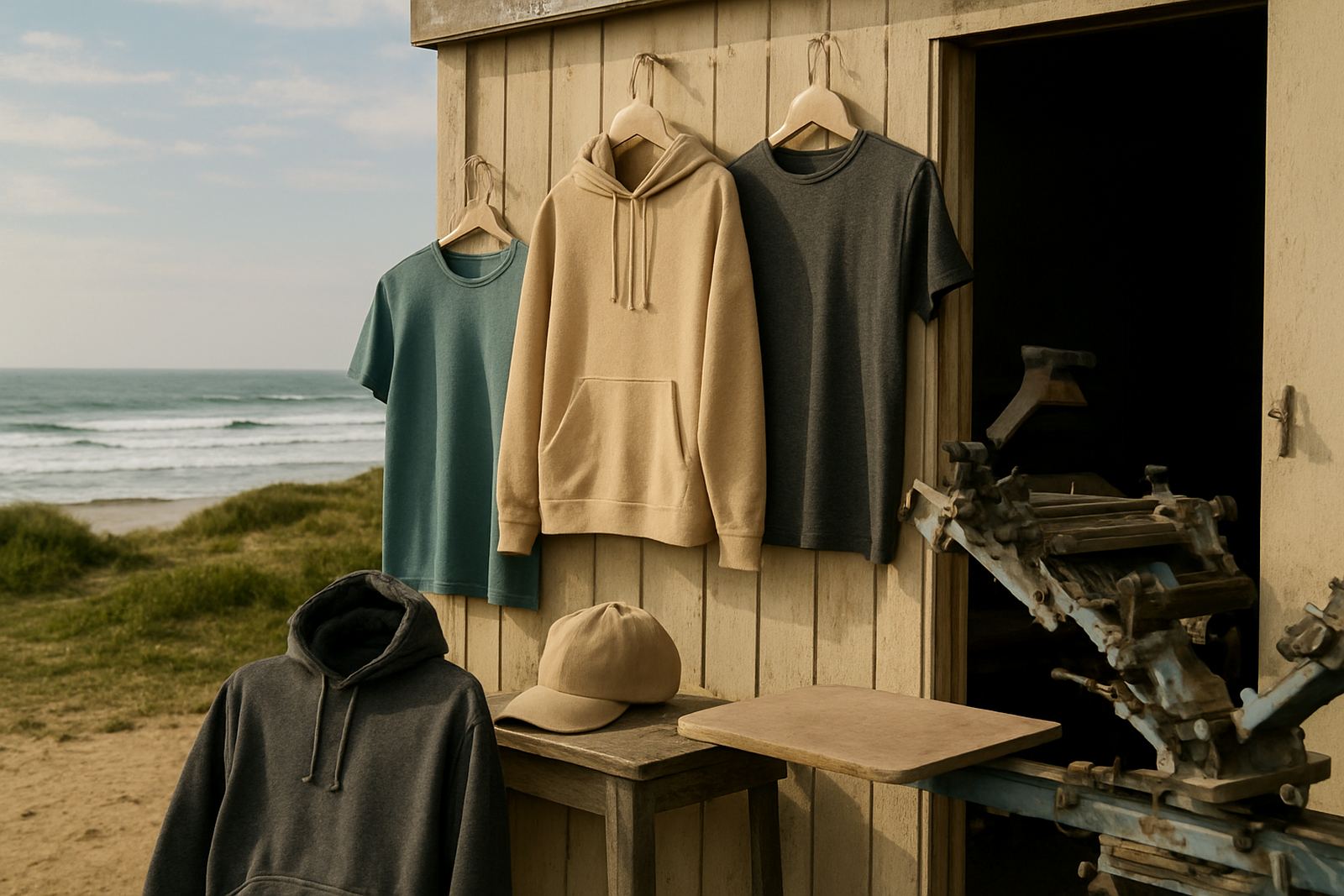
Why coastal clothing needs a different plan
Jeffreys Bay and St Francis Bay do not dress the same as inland towns. Salt air, strong sun, sudden wind and the odd damp morning all affect how garments wear, how people feel in them, and how well prints hold up over time. If you are ordering for a school, surf club, workshop crew or event team, the right fabric choice matters as much as the logo.
Lightweight cotton can be comfortable in summer, but on a windy day it may feel thin and clinging. Heavier fleece gives better warmth for early starts and evening shifts, though it can be too hot for midday use. The answer is usually a mix of garments that cover different conditions, so your team stays comfortable and presentable throughout the day.
For coastal use, think about movement, moisture and wash life. Clothing that is too light fades faster in strong sun. Clothing that is too heavy becomes uncomfortable and gets left in the cupboard. A balanced order usually saves money because people actually wear it.
Choose fabrics that work in salt air and sun
Salt air can be hard on cloth and on printed finishes. Garments need to keep their shape after repeated washing, especially when they are used for delivery crews, builders, hospitality staff or clubs that run weekly training. In summer, breathable fabrics help reduce sweat build-up. In winter, brushed fleece and long sleeve options give useful warmth without needing a heavy jacket.
- For T-shirts, choose a mid-weight cotton or cotton-rich blend for everyday use.
- For hoodies, look for enough body to handle cooler mornings without stretching out at the cuffs and hem.
- For caps, use styles with a firm front panel so the print sits neatly and stays readable.
- For team kit, ask for sizes that allow easy movement across the shoulders and arms.
On the coast it also helps to keep garment colours practical. Mid-tones and darker shades generally hide small marks better than very pale colours, which is useful for events, site work and school activities where garments are worn often.
Layering for mornings, wind and midday heat
The trick in Jeffreys Bay is not choosing one garment for the whole day. It is building a set that works from early morning to late afternoon. Many teams start in a hoodie or long sleeve top, then remove that layer once the sun lifts and the wind eases. That approach keeps staff comfortable without needing multiple uniform changes.
If you are planning uniforms for a coastal business, try to keep each layer useful on its own. A printed T-shirt should still look smart without the hoodie over it. A hoodie should carry the branding clearly even when it is worn open or tied around the waist. This helps the team look consistent and avoids the “half uniform” problem where only one layer carries the identity.
- Base layer: short sleeve T-shirt for daily wear and events.
- Mid layer: hoodie or crew top for cool starts and windy afternoons.
- Optional outer layer: a heavier top for winter or evening work.
- Extras: caps for sun and neck protection on open sites.
Print placement should suit the garment, not fight it
Good printing starts with the right position. On the coast, garments get pulled on and off more often, so prints need to sit where they can be seen and not crack from unnecessary stress. A left chest print is neat for staff wear. A bigger back print works well for events, clubs and teams that need to be seen from a distance. Sleeve printing is useful when you want extra detail without crowding the front.
Artwork should also be matched to the fabric. Fine lines and tiny text can get lost on textured garments or dark cloth. Simple logos, clean lettering and strong contrast usually give the best result. When needed, a sample strike-off helps check colour, placement and size before full production. That saves time and avoids expensive rework, especially for bulk orders.
For repeat orders, keep the same placement and sizes where possible. That makes it easier to match new stock to old stock, which is important for schools, clubs and businesses that add to uniforms over time.
A local example from the JBay to St Francis route
Picture a surf tournament running over a weekend between Jeffreys Bay and St Francis Bay. The organisers need staff shirts for registration, hoodies for the dawn crew, caps for volunteers and team wear for marshals. The morning can start cold and windy, then turn hot by midday with salt spray in the air. One garment would not suit everyone.
In that situation, a sensible order might include breathable event T-shirts, a few warmer hoodies for early shifts and caps for sun protection. If the event has sponsors or division names, multi-colour prints can be added to the front and back. Folding and bagging also helps if the gear must be handed out at different points along the route.
This kind of order works because it reflects local reality. People are not standing in one place all day. They move between shade, wind, vehicles and open ground. Clothing has to keep up with that pace, and still look clean when the crowd arrives.
How to order clothing that lasts through the season
Before placing an order, decide what the garment must do. Is it for daily work, weekend matches, one-off events or school use? The answer changes the fabric, the print method and the pack sizes. It also affects how much you should spend per item. Cheap garments often cost more in the end if they fade, shrink or sit unused.
Our team in the Jeffreys Bay industrial area handles artwork setup, colour matching, one colour prints and multi-colour prints, with repeat order support for returning clients in Kouga and beyond. That helps keep garments consistent when you top up later for new staff, new learners or another event season.
- Check whether the clothing will be worn in sun, wind or inside workspaces.
- Choose colours that match your use and stay practical after washing.
- Confirm sizes early so the order is accurate the first time.
- Ask for bagging and packing if items need to be distributed to different teams.
When you are ordering for Humansdorp, St Francis Bay, Cape St Francis, Oyster Bay, Kareedouw or Gqeberha, the same rule applies: dress for the weather people actually get, not the weather you hope for.