
A Print Can Be Right and Still Arrive Wrong
Screen printing often gets judged on the image alone, but presentation changes how the finished job is received. A box of mixed sizes, crumpled shirts and loose caps creates more work for the customer and more chance of mistakes at handout time. When garments are folded properly the order looks finished, not just printed.
In Jeffreys Bay, where many orders are for schools, surf clubs, fishing crews and event teams, the final pack matters as much as the ink. A neat stack protects the print from rubbing during transport and keeps sizes easy to check before the job leaves the shop. That matters when you are sending kit to Humansdorp, St Francis Bay or further up to Gqeberha.
What Proper Folding Actually Does
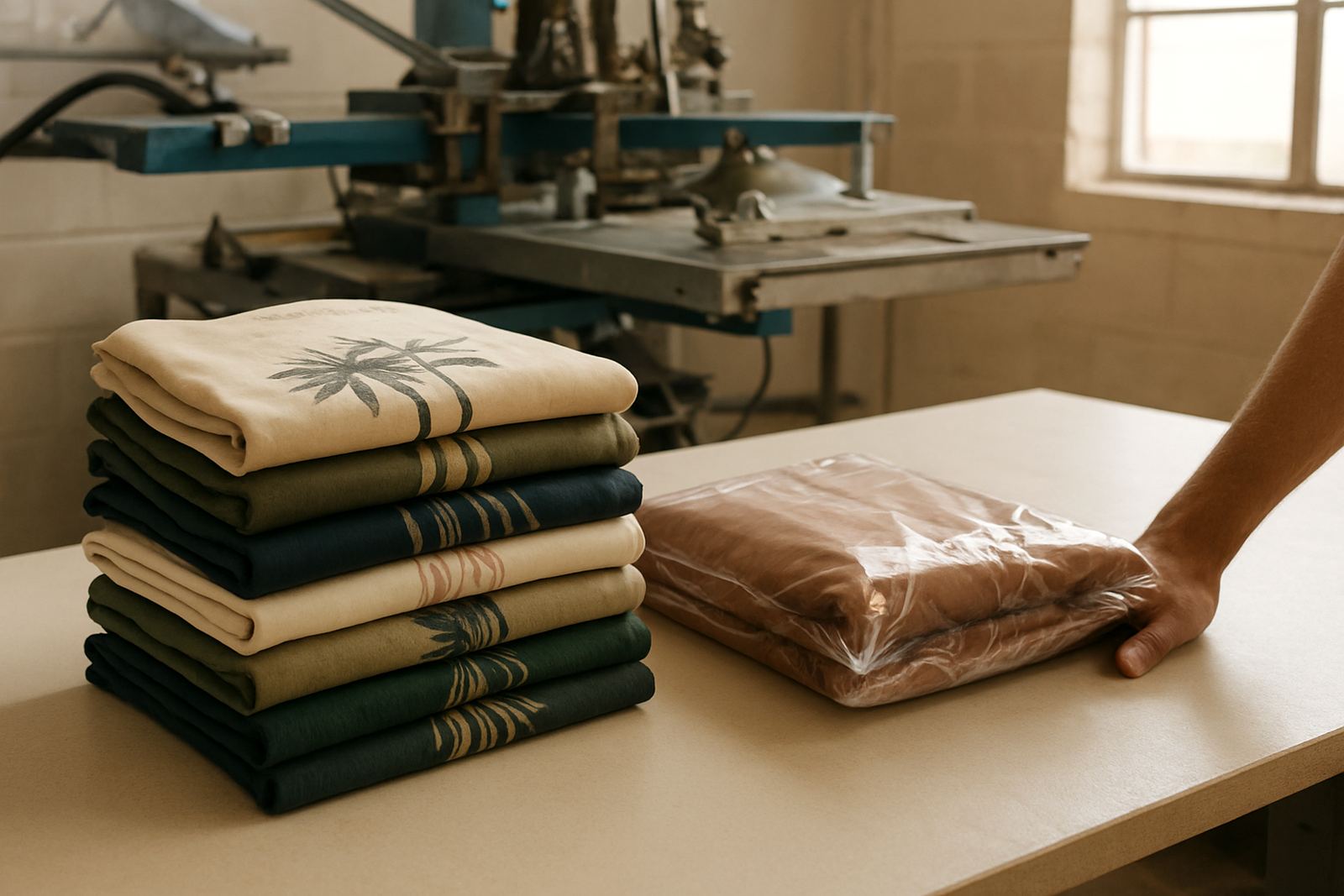
Folding is not just tidying up. It helps the whole order stay organised from the press room to the customer. A shirt folded the same way every time is simpler to count, easier to store and quicker to hand out from a table, storeroom or vehicle tailgate.
- Keeps sizes separated so S, M, L and XL do not get mixed.
- Makes bulk orders easier to count against the invoice.
- Protects printed areas from scuffing and dust.
- Improves the first impression when the boxes are opened.
- Speeds up distribution at sports days, fundraisers and company events.
For repeat orders, the folding standard also helps the customer know what to expect. If a school orders 120 shirts this term and another 120 next term, they should look and feel packed the same way.
Packing for Coastal Conditions and Long Routes
Jeffreys Bay and the surrounding coastal towns deal with humidity, salt air and sand. That means garments should be dry, clean and packed so they do not pick up moisture on the way to the client. A folded shirt placed in a proper sleeve or carton stays in better condition than loose garments stuffed into a bag.
It also helps during load-shedding. If a job is finished during a power cut, the packing process still needs to remain orderly. Folding tables, count sheets and clear size separation keep the work moving when the rest of the workshop routine is interrupted. A simple packing habit can save a lot of confusion later.
- Use dry packing areas away from open windows and blowing dust.
- Keep heavy boxes off the floor where possible to avoid damp.
- Separate dark and light garments if they are still warm from pressing.
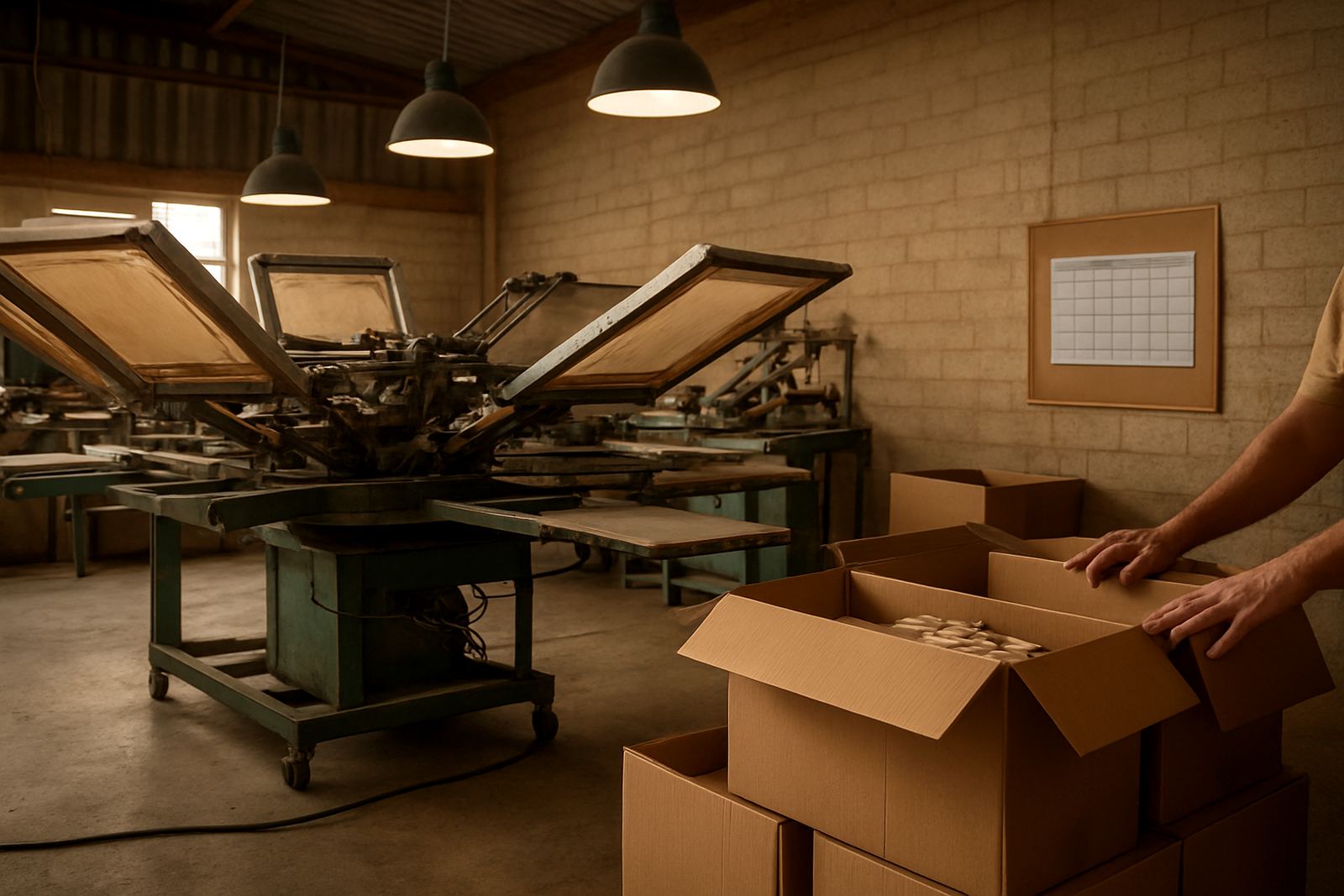
- Mark cartons clearly by size range, style and colour.
Why Schools and Clubs Feel the Difference
Schools and clubs often need the same design in many sizes, sometimes with different names or squad numbers. If those garments are not folded and grouped properly, the admin side becomes a mess very quickly. The coach or teacher ends up sorting on the day instead of handing out with confidence.
That is why folding is part of service, not an afterthought. A local rugby club in Kouga, for example, may need training shirts, hoodies and caps sorted into player packs before a weekend tournament. If each bundle is folded and labelled by size, the team manager can issue kit in minutes rather than spending an hour unpacking and checking every item.
For families collecting schoolwear, neat folding also helps garments fit better into bags and cupboards once they get home. It is a small thing, but it changes how the whole order is used.
Packing Formats That Suit Different Jobs
Not every order needs the same finish. A one-colour event shirt can be folded one way, while a multi-colour hoodie or oversize back print may need extra care so the print does not catch on itself. Caps, beanies and team shorts also need different treatment because of shape and bulk.
We usually match the packing style to the job and the way the client will receive it. Some customers want individual garment packing. Others want cartons grouped by size or department. The best option depends on where the order is going and who will be opening it.
- Individual folding for retail-style presentation or resale packs.
- Size-sorted packs for school and club distribution.
- Mixed bulk packing for internal store rooms and stock control.
- Branded event sets packed by team, route or function.
How Folding Supports Better Order Control
Good folding makes checks easier at every stage. Artwork, print placement, quantity and size can all be confirmed before packing, and that reduces avoidable rework. It also helps when a customer returns months later for a repeat order because the first job gives a clear reference point.
At Brand-On Screen Printing, the finishing stage is handled with the same care as the printing stage. That includes folding, bagging, bulk packing and repeat order support for clients across Jeffreys Bay, Humansdorp, Cape St Francis, Oyster Bay, Kareedouw and Gqeberha. When a job leaves the workshop properly folded it is simpler for the client to store, count and issue without extra admin.
It may seem like a small detail, but in practical work a small detail can be the difference between a tidy handout and a chaotic one.
The Last Step That People Remember
Many customers remember the moment the boxes are opened. If the shirts are neat, separated and ready to use, the print looks more professional and the supplier gets the credit for being organised. If the order is tangled and mixed, even a good print can feel less valuable.
That is why folding matters. It protects the garment, supports the print and makes the customer’s life easier. For schools, clubs, surf crews and businesses around the Kouga region, it is one of the simplest ways to turn printed clothing into something that is ready for real use.